Showing posts with label relationDips. Show all posts

Sunday, October 31, 2021

relationDips: unpalatable and indigestible

Informally, we might use the word 'yuk' to describe such food which we don't like. We don't though. 'yuk' or 'yukky' tend to be used by children as adults have developed more sophisticated ways of saying they don't like or even can't eat certain foods. Imagine a five year old, sitting at the dining table, staring at a few florets of broccoli, saying, 'Mother, I'm afraid I find these particular vegetables unpalatable and indigestible.'


                                                                    photo source

I think some foods are yuk. Some of the dishes presented to me by my wife aren't appealing at all. Okra for example, is a vegetable I have tried to acquire a taste for but I can't get past the slimy texture. Certain other Asian greens taste okay but require exhaustive chewing to get value from them, and even then there is indigestible refuse to eject. I have a thing about having to put my fingers in my mouth while I'm eating, or having to spit things out. Nothing destroys my enjoyment of a meal like a fish bone jamming itself in my gum. I used to not eat cherries because I wanted fruit to put in my mouth, chew and swallow. I didn't want to have to negotiate a stone, then spit it out once I'd stripped the sweet flesh which surrounds it.

Eating shouldn't be hard work. There's usually enough hard work in the preparation, and the after meal cleaning. For me, eating is the part of the process which is enjoyable, or should be. Even if the food isn't great which is usually the case when I cook, the sitting down and eating should provide sensorial pleasure, and it should be relaxing. I don't enjoy cooking or cleaning, although I do find a certain satisfaction in those tasks. Eating is what I like.

There is something I like more than eating, from which I derive greater satisfaction, but even then not all elements of the procedure are equally enjoyable or rewarding. I love writing, but I don't love trying to find publishers or marketing. I love writing this blog. I've been doing it for 12 years, but thanks to Blogger's decision to change its interface, I'm no longer happy with the process. The writing is great. Adding photos and publishing? Not so great any more. I can write a short story of around 2000 words in a couple of hours. I'll usually spend an hour or so editing it, but then I can spend another hour or more sometimes trying to find a market for the story. After submitting it, I'll have to wait (sometimes forever), for a yes or no. If it's a no, I'll find another publisher and send it again. That isn't fun, but it's a part of the process. I wrote the first draft of my memoir in about six months. It's taken another twelve months after that to get it ready for publication and I can't tell you how many hours I've spent on various marketing endeavours. It will be available from November 22. You can visit the page here. 

There are elements of eating and writing which I don't enjoy, on both the consumption and production side. I don't stop eating after I've had a bad meal (unless it was so bad it made me sick and I couldn't eat for a while). Neither do I stop cooking just because I don't like it, can't be bothered, or I've cooked something inedible. (Ask my children about my lemon chicken.) I don't stop writing because my work doesn't sell well, or because I get a long list of rejections; or even because, again, it's too hard or I don't feel like it. I've read some rubbish books but that's never stopped me reading, and I continue to read experimentally, checking our different genres and authors.

None of these negatives put me off doing things I love doing because in my mind it's worth a bit of pain of discomfort to achieve pleasure and satisfaction. Most people have this attitude to things they care about it, and relationships are no different.

If your expectations meter is set to realistic, you know life isn't all strawberries and butterflies. You understand that weeds grow in your garden faster than roses and that if you don't get rid of the weeds and look after your roses, your garden will be 'unpalatable and indigestible.'

Whatever metaphor you want to use, the point is that good relationships require hard work, and if you're going to do your part, you'll need to push through the unpleasant parts while still giving them your best efforts. If I want to cook a horrible meal, I can avoid fresh ingredients and ignore the recipe. If I don't want anyone to read my work, I won't waste time refining and polishing the manuscript, then trying to marketing it. If I want an unhealthy relationship with my wife, I can easily achieve that by giving up. I can pick out all the unpleasant or unacceptable parts of the marriage and focus on them, using them as excuses for not working hard to make my marriage successful. The 'too hard basket' is always an option for those who lack courage.

The thing is, I want to eat healthy, tasty meals, I want to read inspiring, fascinating books, and I want to write books and stories which move people.  All of this requires effort on my part and it won't always be fun. And more than any of that, I want the best marriage I can possibly have. Loving my wife means I need to make an effort. My relationship with her is more important than food or books. She's not food which I can spit out or throw away. She's not a book I can put back on the shelf, then choose another. She's a person who needs me to love her unconditionally and consistently, to respect her, and to make her feel safe.

Perhaps if people took their relationships as seriously as they did their jobs, hobbies, and other passions, we'd have less broken relationships.

Friday, July 23, 2021

relationDips: triple cheese spicy vegorama

With apologies to Dominos, whose pizzas I enjoy periodically, I present the histories of vegetarianism, pizza and vegetarian pizzas. I will then explain how all three are intricately connected with, and reflected in, our relationships.

It seems the earliest record of vegetarianism, which is the choice to not eat meat, is in the writings of ancient India. Unless you read another article which says it was Pythagoras, the great Greek mathematician; he of the famous theorem we all studied in high school. It does seem clear though from the Biblical record that Adam and Eve were vegetarians. Next level vegetarianism is veganism, under which philosophy, practitioners do not eat or use animal products.  The term veganism is a 20th century construct, but this extreme form of vegetarianism, appears to have originated around the same time, in the same cultures. 

Of course in Western societies, with their focus on the individual, vegetarianism has mostly been a choice; either a health choice or an ethical choice, or both. In eastern cultures, so bound with the religious beliefs of Hinduism and its offspring, Buddhism, and very much collectivist societies, such choices have not been, and are still not available.


Pizza was also born in ancient times, although the first use of the word only dates back to first century Gaeta, now contained in the modern nation state of Italy. While ancient Egyptians, Romans and Greeks ate various flatbreads with toppings, the pizza, as we know it today is said to have been created in Naples, in the late 18th century. 

You can travel to almost any country in the world and find some version of pizza, including vegetarian pizzas like one of my favourites, that I mentioned in the title of this post. However, it is only recently, over the last 10-15 years, that major western pizza chains like Pizza Hut and Dominos have begun offering vegetarian pizzas.

Also dating back to ancient, even pre-historic times, are relationships, and it is here that I wish to sharpen the reader's focus.

The issue of eating animal products, or not, can be an issue in relationships, but it generally isn't. Of all the problems and disagreements a couple will face, food has rarely directly caused a relationship breakdown. Eating maybe, but not food itself.

Perhaps because it is so vital, the question of what is eaten by who and where and when, seems to be an aspect of relationships in which compromise is relatively easy. As part of her Catholic practice, my wife chooses not to eat meat on Fridays. Although this prohibition is not a part of my religious practice, it has been an easy thing for me to simply not eat meat on Fridays. It's a simple way for me to demonstrate respect for her. She doesn't eat chicken because she doesn't like it, but she cooks it for the rest of the family, because we do.

If vegetarianism was a big deal for a particular person, it would certainly come up in the early stages of a relationship, and be dealt with. Post marriage or post relationship commencement vegetarianism might present more of a challenge, but as I said, it is highly unlikely to destroy the relationship.


What can we learn from all this? Pizza is good, choice is good, and compromise is not only good, but is also an indispensable ingredient for healthy relationships. Meat, on the other hand, is not an indispensable ingredient for a great tasting pizza.

Thursday, February 18, 2021

RelationDips: Engineering Families Part 2

I’ve been a fan of Neighbours since it first came on our screens back in 1985. When I say fan, it isn’t my favourite show, not by a long shot and I haven’t seen every episode. I don’t have a dedicated blog. I’m not a member of any fan clubs and my knowledge of the show, the revolving plots, cast of characters and the actors who play them is not deep. However, these days I rarely miss an episode, most often watching catch ups on Tenplay. Usually, at any given time, I can tell you what’s going on. Occasionally, I lose interest with certain storylines and characters. At other times, I get right into it. There’s a current thread about a twenty-year marriage ending. Shane and Dipi. Shane lost the plot with a drug addiction. Dipi had an affair. The affair was explosively revealed by people with alterior motives. Shane moved on with Amy who made him happy and accepted him the way he was. Dipi declared her love for Shane and wants to get back together. Shane says no way. I can’t forgive you. Not a far-fetched storyline at all. I should know. I lived it.


Neighbours is a classic soap opera. Everything that happens, though based on very plausible scenarios, is next level dramatic and intense. People are always saying they’ll never forgive someone for what they did. Then after a few more episodes, they do. All the main characters live in the same street, Ramsay Street, and work in the same suburb, Erinsborough. There’s always someone in Erinsborough Hospital. Two of the residents of Ramsey Street work there. There’s always a police drama. Two police officers live in Ramsay Street as well. You get the picture. The potential for drama is untold and for entertainment’s sake is often ridiculous. The various threads are sometimes light, sometimes heavy, but always fun…if you like soap operas.

An interesting subtext to the imaginary lives of Ramsay Street residents is the social engineering which drives both the creation of characters and storylines. Here’s a few examples.


1. - Mackenzie is a transgender character who, not long after joining the regular cast, had her final gender reassignment surgery.

2. - David and Aaron are a same sex attracted couple who after experimenting with foster care, enlisted the help of their same sex attracted female housemate to ‘have a baby with them.’

3. - The newest teacher recruit at Erinsborough High is deaf. The actor wears a Cochlear implant and plays a deaf teacher on the show.

4. - Terese, who runs Lassiter’s Hotel, retracted an earlier, politically incorrect Australia Day statement, in order to make amends on the Australia Day episode.

Three of these four are controversial issues which the producers and writers of Neighbours, clearly very liberal thinkers (aka ‘tolerant and inclusive’ in newspeak), are not afraid to tackle. And why would they be? The deliberate move towards ‘normalizing’ people who have traditionally been marginalised by mainstream society and discriminated against because they are different is not necessarily a bad thing. However, it does mean, that because minority groups have to be given equal status and equal opportunity, we now have a situation in which the microcosm of a television show does not actually reflect the composition of society. What we see is what the makers of these shows want us to see. Ramsay Street has a transgender character, a same sex attracted male couple, and a same sex attracted female who injected herself with sperm so she and her friends could have a baby together. What they don’t have is anyone profoundly disabled, regular indigenous characters or anyone from an ethnic minority who migrated to Australia with poor English. Never mind those minority groups though.


Getting back to the broader issue of families, Karl and Susan Kennedy are Ramsay Streets grandparents who have operated as defacto parents for many ‘strays’ over the years since their own children grew up and moved away. For example, Hendrix is currently living with them after his father’s marriage ended and he moved away. (His father is the guy who had the affair with Dipi.) The idea that families are no longer narrowly defined along the traditional lines of mother, father and biological children is simply an acknowledgment of reality. However, the concept of the extended, blended, all-inclusive family with many people contributing to the raising of children is not an innovation.

“It takes a village to raise a child” is an African proverb which reflects what we all know to be true, but it’s worth examining in much finer detail. If the village is a village of idiots then there’s no benefit to the child right? If the village practices female genital mutilation, for example, then perhaps that’s not a great village either. If no one works in the village, then that’s a pretty pathetic example to set for children as well. So, the value of the village quite clearly depends on a number of factors.

My point here is that television shows like Neighbours seem overly interested in dictating what modern families should look like. I’ve deliberately avoided talking about the show Modern Family, even though it is also a classic example of what I’m talking about. Popular culture is tremendously influential. To say the themes and storylines of many movies and television shows, like Neighbours, are merely mirrors of society is disingenuous. The truth is they represent a deliberate attack on the family unit.


.

Saturday, January 30, 2021

RelationDips: Engineering families


It's advertised as a family home, but I'm struck by a thought as I reach the end of the hallway which extends from the front door to the back of the house. I've walked past four small bedrooms, (even the master feels pokey), a bathroom and a laundry, to arrive at the 'open plan' living area which combines kitchen, dining and lounge room.

The house is still occupied so the resident's choice of furniture may be colouring my perspective, but I see in the living area that there are only two eating options. You stand in the kitchen or you sit on the lounge in front of the television. There's a poor excuse for a backyard and a modest sized 'outdoor entertaining' area.

The space devoted to shared family experience in this family home is minimal. I leave quickly. This place isn't for us. I want some room for family and guests to hang out together and yet not be on top of each other. Call me old fashioned but I like the idea of sit down meal with no other amusements. Just people and food.* 


Food is for the body, to satisfy hunger and to nourish us. People, with whom we have relationships, are for the soul to satisfy a different kind of hunger and to nourish our souls. Certainly we need to eat, and good food definitely enhances our lives, but there's a different kind of food we need to be really happy. Good relationships are crucial to our mental, physical and spiritual well being. In the house I viewed, I saw a suburban cell block, designed to isolate members of the household and hinder the development of good relationships.

Think about the design of the house in which you live. Is it a house which serves the family unit or the individual? Is it an open house, a welcoming and generous place which puts people and relationships first? 

Of course, your home should be a sanctuary, a place to rest and withdraw, but it shouldn't be a jail, a fortress or a permanent hiding place. As well as the houses in which we live and make homes, the food we eat-when, where and how-helps build strength and unity in our family relationships.

Like good, healthy relationships, happy, peaceful families don't happen by accident. They have to be engineered, which in the first instance involves making certain choices. In order to live the life you want, you have to be intentional about it. The physical space you live in, and how you use it, is just one of the areas which need to be considered. The modern world delivers many mixed messages when it it comes to relationships in general and families in particular.

Today, I've talked a little about the design and use of space in the family home. In my next post, I'll explore another of the battleground areas for families.

* by distractions I mean television or handheld devices. I think board games are good value. A fun and excellent relationship building activity.

Saturday, June 20, 2020

RelationDips: peanut butter and jelly

On a recent edition of the hugely successfully, internationally syndicated radio show, Over the Fence with Trev and Dave,  I had to fly solo, so I chose to honour my missing radio partner by examining lists of top male duos.

To my surprise, or perhaps complete bewilderment would be a more accurate term, two food duos appeared in the first list I found. Whilst, I can't dispute that peanut butter and jelly (what we call 'jam' in Australia), and burger and fries are excellent food pairings, I was perplexed as to how they made it on to a list of male duos. I'm pretty sure food is asexual, or gender neutral or whatever. Clearly food is even more important than male duos.

The inexplicable listing of peanut butter and jelly, and burger and fries on a  list of top male duos, did, however, get me thinking about food combinations and relationships. There's a sweet and savoury thing going on with many food pairings. There's a sense of complementary tastes and sometimes textures which make these combinations work for some people. I must emphasize some people, because not every thinks cheese and Vegemite is a good match up...for example. In fact, this might not be anywhere near as delicious or as popular as Vegemite and cheese fans make out.

People often say they don't like certain foods or particular combinations of foods. Excluding people who have not even tried the thing they say they don't like, people who say they don't like certain foods often have a hard time saying why. They might use terms like it's too sweet, which makes sense if the person is not a sweet eater, but is baffling if they are. I do this. When offered a Vietnamese style sweet, lovingly prepared by my wife, I rejected it on the basis the taste was too sweet. (I did have an issue with the texture as well, but that wasn't the main issue.) I love sweets, yet I rejected the sweet my wife made because it was too sweet.

Time to get to the bottom of the margarine tub. What am I talking about here?


  1. Saying you don't like food you haven't tried, is the same as judging a book by its cover. In other words, we avoid getting to know some people based on very superficial opinions which may be quite misleading. Relationships of value are deep wells, not footpath puddles.
  2. Saying we don't like a food because it is too sweet, too sour, too salty or whatever when we generally love that kind of food reflects the conflictedness** of our inner natures, which in turn we carry into relationships, with predictable results. Relationships of value recognize, accept and deal with conflict in the kitchen and on the dining table.
  3. Saying a particular food combination is wrong because we think it's a horrible, unnatural confluence of foods is like saying people who aren't alike, shouldn't be together. Or worse, people who don't look right together, don't belong together. Relationships of value are always, in some significant sense, complementary.
Most people not only need food, but love it. Likewise, relationships provide sustenance for our souls, and a huge amount of pleasure when they are healthy. Whether other people can see it or not, there is only one valid question about the relationship, irrespective of what it looks like (or tastes like -that sounds a bit odd). Does this relationship bring out the best in both people? To put it another way, is this relationship a blessing to those in it and those around it?

How would you describe your most significant relationships in food terms? Peanut butter and jelly? Beer and prawns? Ice cream and hot apple pie? Please don't say Vegemite and cheese.

*Over the Fence with Trev and Dave is on Darwin's 97.7FM, Monday nights from 7-9pm.

**conflictedness is not a word according to the spellchecker, but I dispute that.

Sunday, April 12, 2020

relationDips: the eternal pantry

Food is purchased from the supermarket, brought home and stored in the fridge and the pantry. At the appropriate time that food is consumed, and will need to be replaced, if it's a staple or something you like, or substituted if it is not.

A pantry is a food cupboard, but we have other types of cupboards and storage spaces around our homes where we put things until we want to use them. We collect these things through various means, mostly our own purchases, supplemented by the presents of others. The purpose of these things is to add value to our lives, either aesthetically or practically. Essentially, because quality of life is primarily and directly connected to the quality of our relationships, these things are servants, slaves to a greater cause.

There are of course other investments we make into our relationships like time, and the greatest of all gifts; ourselves.
Just as food supplies what our bodies need, there are certain types of essential food for relationships. Love, in all its many splendid forms, care, consideration, courtesy, passion and sacrifice, is an obvious one. Love is infinite because it comes from an inexhaustible source. It's very much like the endless pack of Tim Tams where by some magical power you can keep on going to the pantry and getting more love. 

It's the same deal with patience and kindness. It even works with gratitude and passion. These priceless commodities emanate from the source of all good things: God. God is our eternal pantry, the tireless supplier of those precious things we need to keep our relationships healthy. The bottomless well of relational nutrients.

The COVID-19 pandemic has exposed many of us to empty supermarkets shelves for the first time in our lives. Our pantries are perhaps also less well stocked. These shortages have allowed the weeds of fear and anxiety to prosper as our life sustaining ability to interact with others has been curtailed and much of the fun taken out of our social lives. Whether this hurts or helps our relationships depends on us.


Many are finding pathways through the darkness because of the eternal light which illuminates the road ahead. Faith, hope and love are also flourishing as we hold on to them, and for some of us, as we hold on to their ultimate source. God promises to supply all of our needs. He never breaks his promises, which is another thing we should learn and apply to our relationships. To have happy and healthy relationships we need more of what God has to offer, and it's as easy as entering the pantry or opening a cupboard and taking it off the shelf.
Friday, November 8, 2019

RelationDips: octopus balls

Every second Thursday, my friends and I get together for dinner. We call it Connect and Chill. On the alternate Thursdays, we meet to study the bible and to pray. These nights are called Connect and Grow. Chill nights are held in various locations around Darwin; a different restaurant or pub each time. The suburb of Parap was chosen on the most recent occasion, but it was  a toss up between Parap Tavern and Oka Japanese. We took a vote which ended up a tie.

Parap Tavern on Thursday nights has a special: two chicken parmigianas and a jug of beer for $30, but it's not special food. It's pub food. Whichever pub we go to, the menu is pretty much the same. You can get a steak, a parmy, a burger, or barramundi (fish). All of which come with salad and chips (thick cut french fries).The menu varies little, and neither does the quality. It's ordinary food. Safe food, Good food.

The first time I went to Oka for dinner, I saw octopus balls on the menu and knew I had to try them. They could have been testicles or just ball shaped pieces of octopus for all I knew. Either way, I had to try them because I love octopus, and every time I pick up a menu, I look for something I haven't eaten before. Japanese restaurants have standard menus too. Sure, they're more exotic than pub menus but Japanese cuisine is not new to Australia. A set of standard dishes, like chicken teriyaki, will be offered to mostly non Japanese customers.

Not everyone likes Japanese food. Others don't particularly like the uninspiring offerings of hotels like Parap Tavern. The thing is, going out to dinner is never about the food. Not for me anyway. The food I eat is only a side dish accompanying the people I'm eating it with. For that reason I never say no to any restaurant suggestion. I expect to find something I can eat, and probably enjoy-maybe even my next favourite meal, but even if I can't, I didn't go for the food, so I'm never disappointed.

Food and eating brings us together. Most cultures do this exceptionally well. Gathering together with family and friends to enjoy a meal. My wife finds the idea of a pot luck dinner weird, but she comes from a culture in which if you ask someone out to a meal, you are expected to pay. The person you ask can invite someone else along and you will be expected to pay for them too. The concept of ordering individual dishes is also strange to her, as it is to people from many other countries.

Australian's have learned how to share when we eat at Asian restaurants. We've learned to appreciate the finest flavours from across the globe. It is an indisputable benefit of the controversial multiculturalism doctrine that our palettes have been broadened. In culinary terms, our lives have been enriched, but for me, it is still not about the food; it's about the people.

Food should add value to our relationships, regardless of similarities or differences in our tastes and appetites. Food is not just fuel for our bodies, it is lubricant for families, friends and society on the whole. 

Oka lost the vote last time, but we are going to eat there next time. Mark the date: November 14, and join me for some octopus balls. Don't worry about what they are. Just try them, and let's enjoy the experience together. Remember, it's not all about the food.

Friday, October 11, 2019

RelationDips: microwave relationships

It's a thing of the past now, but I once had a blog called 'I Don't Cook' which had a huge following in Poland. For all but 9 months (that's interesting) of my 3 year and 2 month long Darwin experience, I have lived alone. Those who live alone appreciate the problem of cooking.

Even if you like cooking, it often does not seem worth the trouble just to cook for yourself. My solution to this problem was to primarily consume microwave dinners. This had several benefits beside convenience, but I'll get to them in a moment. Reactions from people who I inform of my reliance on frozen meals are mixed; understandably so.

The proof is in the pudding though. I have saved a small fortune, maintained my weight and not wasted any food. Microwave meals tick a number of boxes for me, but one thing I do not do is draw any parallels between frozen dinners and relationships. Why would I? Why would I indeed?


  1. Microwave meals are cheap. If you want to save money, you could easily get away with only spending around $30 for a week of dinners. Eat only frozen dinners with your partner, justifying your choice with parsimony, and you are barking up the wrong tree.
  2. Frozen dinners are convenient. If you are consistently, or periodically time poor, these meals are life savers. In 5-8 minutes with nothing more than a few pokes of a fork through the plastic, you can have a meal. Be so busy that you are a.squeezing in time to be with your partner around your other activities or b. assuming they will accept being an afterthought, or c. playing the "quality time' over 'quantity time' card, and you have the wrong end of the stick.
  3. Microwave dinners are tasty. They come in a huge variety of cuisines with plenty of pasta and rice dishes as well as vegetarian offerings. I've eaten a few duds, but by and large they taste good. However, I've never had a "proper' meal and wished I was having a 'nuked dinner' instead. There's a big difference between an okay relationship and a good one. If you don't know the difference, let me give you a phone number to ring for help. Mediocre is not an acceptable adjective when applied to relationships.
A good relationship is expensive. It will cost money and time, and if you want it to stay good, then sacrifice is required. Love requires the exertion of your will and the execution of your selfishness. It takes effort. A good relationship should be consistently good, at the very least. It doesn't always have to be great, but it should have plenty of great moments. If you're in a relationship which has more lowlights than highlights you're in trouble. 

If your relationship feels like a microwave dinner, do something about it. Fix it. In other words, be the solution. If you can't fix it because the other person doesn't want to, then get out. Go to a restaurant and buy a real meal, or go to the supermarket and buy fresh ingredients to cook up something special. Ditch the frozen dinner relationship. You're better than that.

Friday, March 15, 2019

relationDips: rules of engagement (culinary)

Anarchists feel that rules are like prison bars, so do rebellious teenagers. There is something of the rebel in all of us: it's human nature. However, most of us learn to accept rules and acknowledge that, paradoxically, although they do impose restrictions, they also provide freedom.

For example, I feel safe and free when I drive because of the road rules, and my faith that the majority of my fellow motorists know the rules and obey them. We all bend these rules to some extent, but generally we acquiesce to the order they impose.

Relationships require rules. They may seldom be called rules, and are often spoken negotiated agreements rather than codified laws, but they are invariably established within all relationships. Sometimes, they just happen as in one person's reaction to the other's breach of an unspoken rule which results in an apology and a promise to "never do that again". At other times, they are more purposefully constructed. A person entering a second marriage will want to discuss the issues which contributed to the demise of their first marriage in an effort to make sure the mistakes of the past are not repeated.

Image result for money, sex and parentingMy wife and I discussed big issues like money, sex and parenting before we married. It was the second time around for both of us and we each wanted to ensure that we understood the other's expectations. An early obstacle for us was religion. I'm a protestant Christian and she is a Roman Catholic Christian. Despite our mutual faith in Christ, we had to deal with the matter of church rules versus the teaching of the Bible. We agreed to be tolerant, and not to force each other. We agreed to disagree about somethings. For example, the Catholic rule which prevents my devoted wife from ever taking communion because she is a divorcee. I strongly disagree with this church rule, but I respect my wife's right to accept it. This has become a "rule" in our relationship which we both understand and adhere to, and within which we are free and feel safe. She knows I will not go on about it, nor criticize her or force her to do something about it.

Image result for abstaining from meat on FridayAnother catholic church rule which is not Biblical is abstaining from meat on Fridays. I understand this is a mark of respect for Christ who was crucified on a Friday. However, my understanding of the Bible is that we are free to eat whatever we want to, whenever we want to. Peter's vision is instructive, but Paul adds some words about food in relation to respecting other people which also need to be taken into consideration.

In the continued search for more common ground, I decided to not eat meat on Fridays. It makes very little difference to me. Even though I eat meat almost everyday, I considered it an inconsequential sacrifice. My wife was overjoyed at this simple gesture. It is now something we do together to demonstrate our mutual faith in Christ, and to show respect to our Saviour and to each other. By doing this, I am being respectful rather than just talking about being respectful.

I eat well and regularly. My example has influenced her to not skip meals. I used to eat sandwiches and drink Coke everyday. Under her gentle influence, I have reduced my Coke consumption by half and dropped one of my lunch time sandwiches for a hot meal. Some of these changes were negotiated and others have just happened as result of the time we have spent together, positively impacting on each other's lives.

My wife once told me that she didn't like rules. At the time, I challenged her about this, but have since accepted it is not true, not as a blanket statement anyway. I don't go on about it. This is another example of one of our rules, but we don't need to be explicit about its existence. A good set of rules should just operate in the background, underpinning the relationship.

To finish I return to Paul's words:

Romans 14:3 "The one who eats everything must not treat with contempt the one who does not, and the one who does not everything must not judge the one who does, for God accepts both."

I  think this is an excellent culinary rule for healthy relationships, and by extension an admirable goal for relationships in general. What say you?

Saturday, November 17, 2018

relationDips: condiments

Using the broadest definition of the word, a condiment is a substance, sauce or herb, (I'm going to include spreads as well) added to food to enhance its flavour. There is an unbelievable number of different condiments available. Take a look in your pantry and your fridge and you'll probably find numerous examples...you may also want to check the use by dates on them while you're there.

There are really obvious and popular examples like salt and pepper, tomato sauce, mayonnaise and peanut butter. There are also less well known condiments such as caramelized balsamic vinegar, sesame spread, sambal oeleck and mango, lime and chili dressing.

The knowledge and or use of these various condiments depends on individual taste and culinary daring. I tend to steer away from the exotic ones and purposefully avoid such unpleasantries as Vegemite and worcestershire sauce. But each to their own right?

Most people add something to their food to improve the flavour because they want good taste: an enjoyable food experience, not just another boring meal. Usually, it's not the case that the food is bad, but more that it is better with a condiment: more exciting even.

His mates were thrilled when he announced that he was getting married. There was an explosion of handshaking and backslapping as he made the announcement over a round of beer at the local pub. They offered hearty congratulations and well wishes to him, except for one of his friends who asked, with zero tact, why the hell he would do that. Why would he tie himself to one woman for the rest of his life?

The mood at the table soured immediately as the man's joy was challenged by this one dissenting voice. The man sipped his beer, gathering his thoughts, before he replied to his friend's question, "Because women are not condiments."

Disgruntled, the friend who loved women in the same way he loved food, walked away. The celebrations resumed in the wake of his departure.


Sunday, November 4, 2018

relationDips: Vietnam part 2

My experience of Vietnamese people, both in Australia and in Vietnam, is that they are extraordinarily hospitable. As it is across Asia, it's all about the food. There's always a fine selection of food when you sit to eat at someone's home. Pho (beef noodle soup) may be a quintessential Vietnamese food, but we only had it outside of the home, in any number of ubiquitous little restaurants. Home meals, family meals, comprise a table full of plates and bowls filled with salads, meats, sauces and noodles. 

It's wonderful to look at, and participate in, such a amazing spread, even if many of the food items are unidentifiable, and some even unpleasant looking. Exotic? Nailed it.

One night, at the home of my father-in-law, I had another one of these great meals, and finished it well satisfied. I was relaxing with a cigarette after dinner when I was summoned next door to my new uncle's home...for dinner. I groaned a little inwardly.

I joined my father and law and uncle, and a hard rock loving friend of my uncle's whom I had met earlier that day. I joined them on the floor where another no less impressive array of food lay awaiting our enjoyment. Also, on this "table" was a large bottle of home made whiskey which was mounted on a little stand so as to make pouring easy.

And so began more culinary exploration, interspersed with drinking whiskey from small glasses ( a little larger than a shot glass). Before we drank we toasted, each time. Evidently if you take a sip, you must invite everyone else to drink with you. When we had finished eating, and of course I only picked at the food because I was not hungry at all, I stood to go outside for a smoke. My father in law insisted I stay, and so we smoked together on the floor of my uncle's living room, then stubbed out our butts in the food scraps.

Following the meal, we began to watch music videos and the aformentioned hard rock loving friend of my uncle and I worked our way through a fine collection of hair metal bands, mostly Bon Jovi. There was, quite naturally, singing and air guitars. Communication was very limited due to the language barrier, but we connected.


I don't drink whiskey. I never smoke inside. I prefer to sit at a table to eat, and I only ever have dinner once a night. Nevertheless, I had a really great time. When in Rome...right?

What is the appeal of this kind of activity? I think it's about building relationships. My wife was somewhat disproving of my involvement, but that was mainly due to the cigarettes. I was with her father and some other men in a family home. It was safe place, and I guess we were bonding. I wondered about the things we do to fit in, to gain acceptance, to not cause offence to others, to simply satisfy curiousity.

I've had some unsafe experiences in my life when my motives for involvement were far less pure than on this occasion, where my desire was simply to bond with the man whose daughter is now my wife. I've rarely encountered a better example of the intrinsic connection between food and relationships.

Friday, October 5, 2018

RelationDips: like father

Image result for like father movie imagesThe film Like Father, which stars Kelsey Grammar as Harry and Kristen Bell as Rachel, is a reconciliation story, and that's primarily why I loved it. There is so much brokenness in this world, so many loved ones estranged from one another, so much pain and regret. Unity and peace are relationship ideals, which we all desire, but we have to work so hard to achieve them that many people find it easier to cut people out of their lives instead.

Burning bridges is a simpler process than mending fences. Building walls is a less complicated option than tearing them down. Wait a minute! Look at those metaphors literally. The opposite is in fact true. The truth is, it requires more time, effort and care to build a wall than it does to destroy it. Logic is turned on its head when it comes to relationships.

Harry is a workaholic father who walks out on his wife and daughter, Rachel, because it is too hard. Rachel hates what her father did, but her remedy for the pain is to become a workaholic herself. (Hence the title of the film). On her wedding day, she does business on the phone outside the church while the music plays, and the congregation waits expectantly for her to walk down the aisle. The groom wonders about the delay as familiar feelings torment him. Finally she enters, but during the ceremony, her phone, which she hid inside the bouquet before entering the church, falls on to the floor. The groom pulls her aside and says he cannot marry her. She loves her job more than him.

Unbeknownst to Rachel, Harry is at the wedding.They see each other for the first time since Rachel was a child, but she runs away, upset by being jilted, and shocked to see Harry. Later he comes and knocks on the door of her apartment, thus beginning the reconciliation which initially takes place courtesy of copious amounts of alcohol at a bar, before continuing on the pre-booked honeymoon cruise.

Like Father is a very funny film with heart, and a poignant message about relationships and the choices people make.

The emotions experienced by Harry, which ultimately caused him to abandon Rachel, are not uncommon. Many men become husbands and fathers before they are emotionally mature enough. Some survive. They fight against the selfishness and learn to excel and flourish in these important relationships. Many others, flee. I doubt any of those who run from responsibility, escape the guilt and shame associated with their selfishness.


Most of us acknowledge that people are more important than things. Why then, do we live as though the reverse is true? The man who works so much that he has no time to invest in his marriage says he is providing for his family. He is doing what he has to do. Challenge! I met a man like this once. He said he had thought he was doing the right thing in making sure his wife and children had everything they needed and more, but when his marriage fell apart and his children stopped talking to him, he realized that his family wanted him, not his money.


Relationships are hard, but we are built for them. We are designed to prioritize each other. We were created to love and be loved. You don't have to look far to see evidence of how wrong we have got it. Invest in people and relationships above all else. Forgive others, forgive yourself...be reconciled to one another, and find peace. 

Wednesday, June 20, 2018

relationDips: crabs

Image result for crabs
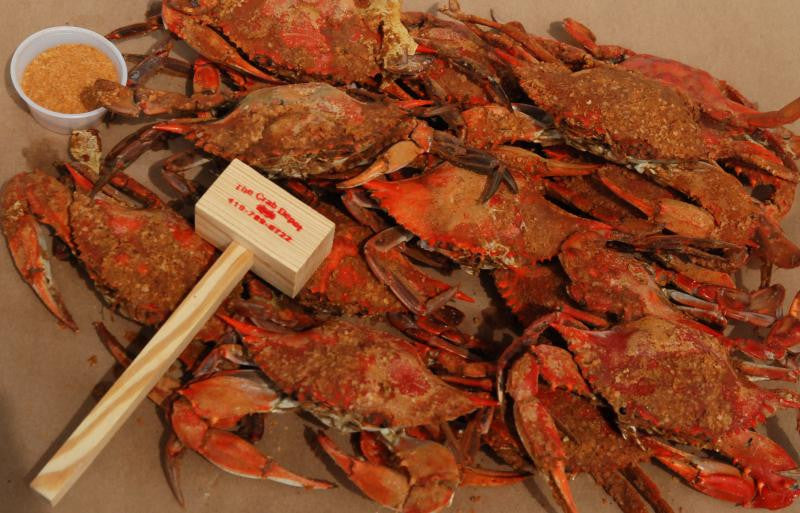
Fortunately I had a caring tablemate- two of them in fact- who served me by doing the hard yakka of cracking the crab shells and extracting what little meat was contained therein. Had I been left to my own devices, I might not have bothered. In fact, I seldom do trouble myself with crabs or lobsters because I simply don't feel it is worth the effort.

I can be bothered with prawns though, but prawns are easy to peel or shell - whatever the correct term is. Crabs are not. The thing is the meat tastes nice. The problem is there is very little of it. Having been fed for about twenty minutes on tiny little pieces of the sweet white meat, I felt as though I had eaten nothing. As more courses arrived, including tiny shells containing even tinier portions of flesh, I decided I had to contribute to the work. I cracked some shells and picked away, helping my dinner companion finish all the crabs.

Looking at the impressive pile of shells left behind only made me smile, as I fought the desire to cross the road and order a big steak.

My dinner partner loves seafood. It is her first choice and she delights in the labour intensive consumption of crabs. I'm a little bit of a lazy eater. Although I referred to steak, I rarely eat it, preferring rice and pasta dishes instead which are very easy to consume. Had my stomach been big enough I could have easily wolfed down a couple of plates of stir fry ostrich with rice in the same time it took to eat maybe 50g of crab.

As I do, I reflected on this event. Good relationships, like eating crabs, require a lot of work: patient toil to reap sometimes only a small reward. The cumulative effect of these small rewards is invariably quite satisfying. There is no rush to finish the crabs. Crab lovers understand the process takes time and they enjoy it. It's not about eating, it's about enjoying a meal.

Perhaps this is why so many relationships struggle. Firstly, a lack of patience. Secondly, a lack of understanding of the process. Thirdly, an over emphasis on the result, and finally a lack of commitment to the necessary work.

I may never be a crab lover, but I believe I can learn to be better at relationships. Even if I never fully appreciate crabs, I am thankful for this experience of eating them, and I do appreciate the importance of good relationships.

Image result for crabsTo finish I must honour the servant heart of the beautiful lady who served me that night. Both she and her daughter literally had me eating out of the palm of their hands, because they thought nothing of helping me to enjoy a meal with them. Crack! One incy wincey piece of crab for you...crack! One incy wincey piece of crab meat for me.

Wow! There's a radical idea. What if the husband and wife served each other in humility. Now there's a marriage made in heaven.