Showing posts with label D.A.Cairns. square pegs. Show all posts

Saturday, September 18, 2021

relationDips: Why I don't argue

My wife insists on washing all fresh food, including pre packed meat before she eats it, or uses it to cook. Even after washing, she is suspicious of skin and will peel it off: even grapes. All traces of soap must be rinsed off the dishes before they are considered clean. Frequent handwashing is normal, and was normal before COVID. Now before you insensitively start labelling her a clean freak, let me tell you there's good reason for all that. She comes from a place where the standards of personal cleanliness are higher because they must be. Unsafe food handling and preparation by businesses from markets to groceries to restaurants put customers at risk. The detergent used to wash dishes isn't safe, dangerous chemicals are used in food production, and you can't drink water from the tap. As I said, she has good reason to be careful.

I've spent most of my life not giving a toss about these things. In Australia, which is one of the most heavily regulated nations in the world, we take it for granted that we can drink water straight from the tap. If the bag of veggies in the supermarket has a label saying 'pre washed and ready to serve', we accept that.

Since marrying my Top End Angel, I take more care. I wash apples before I eat them, I rinse all (most) of the detergent off the dishes, and I wash my hands...often. I don't do these things because I think they are necessary. They are not. However, my wife thinks they are necessary. She wants to keep herself and her loved ones safe. I could argue the point every time she tells me to wash my hands after I already washed my hands or get upset at her for getting upset with me for not washing the chicken breast before I used it to make the tacos she won't eat. I could contest everything, attempt to change her mind, and try to win every argument, but why would I do that?

We've had very few arguments in our short marriage and while that's partly due to our complementary personalities, it's also due to the fact that over the years I've learned something about arguments.

  • Nobody wins arguments.
  • Arguments don't get the expected results.
  • Arguments expose character flaws.
  • Pride is the chief cause of arguments.
  • Arguments don't build strong relationships.

As a result of these lessons, I avoid arguments. Don't get me wrong though. It happens to almost everyone. None of us are perfect and there are times when we either start arguments or needlessly get involved in them, even ones which have nothing to do with us. But, what is the point?

I could argue with my wife about her over the top cleanliness, but I know she's coming from a good place. She loves me and wants to look after me. Why would I resist that? I could argue with my children, but I know they are not interested in truth or in doing what is right or sensible, so I tell them what to do. If they don't do what they're told, they know the consequences. There's no point arguing about it.

Perhaps the most dangerous thing about arguments is they cause division. This is equally true in your home as it is in the COVID world. People are arguing about the vaccinations, the lockdowns, the restrictions, but I don't get involved in those arguments. The government is coming from a good place, not trying to ruin my life or control me, but trying to keep me safe...just like my wife is trying to keep me safe at home. Some of us respond to the government, to our bosses, even to our family and friends like rebellious teenagers do to their parents.

There are and always will be people with whom I disagree, but I am not interested in having arguments with them. I'm not going to expend energy trying to change people's minds. I have friends who fervently believe COVID is a conspiracy, and that the vaccination passport is a sign of the end of the world. I've been double vaccinated, but I have friends who are refusing vaccinations on the grounds that they are potentially harmful and/or part of some sinister government plot against freedom. We can stay friends because I am not interested in having an argument. I disagree with them, but I'm not going to start a fight about it.

Whether it's a global pandemic or a family meal, I don't argue. Of course, many things need to be discussed, some of which are important, some not, but if you aren't sure of the difference between a discussion and an argument, consider the list above. Ask yourself a few questions before, during, and after the conversation. You'll figure it out.

The most important question is this: Do you want to have good, healthy relationships or do you want to be right all the time?


Saturday, September 4, 2021

A Dog's Eye: Freelancer v Upwork

Starting a new business is not easy, especially when you're not a business oriented person. For me the 'business' of writing is nowhere near as fun as actual writing. It has its moments of course, but rather than being 'writing' moments, such times are the fruit of writing and/or the fruit of the business of writing.

As a 'nobody' novelist, the business of writing is all about selling books: marketing, to find readers, while as a short story writer, it's all about the search for markets, trying to find publishers. On the other hand, the business of writing for a freelancer is all about getting clients.

Irrespective of the specific target of my writing/business of writing endeavours, the bottom line goal is to meet needs, to satisfy demands.

Which brings me to Upwork and Freelancer. How have these two platforms met my need to find clients? How are they supporting me to build my freelance writing business?

Profile creation 

Not much difference between the two. It's relatively straight forward to create a basic profile on both. However, the Upwork website looks cleaner, more professional, and is easier to navigate than Freelancer.

Membership 

Freelancer charges a monthly fee for membership at different levels. I'm on a basic membership plan which allows me to bid for 50 jobs per month for $13. For an additional fee, you can take a grammar test which if you pass adds 20% value to your profile. I refused to do that. They also offer to boost your proposals for a fee. There are a number of other allegedly useful services which also requirement payment.

Upwork gives you Connects to use to pay for bids when you sign up. Proposals cost from 2 to 6 Connects. When you run out of Connects, you can purchase more in packages starting from $3 for 10 Connects. If you respond to an invitation or interact with a client, Upwork also gives you free Connects. In other words you get rewarded for being active. It's been two months since I purchased any Connects on Upwork.

Bidding

Freelancer has two channels for finding jobs, one of which is a drop down of the very latest jobs. Initially I thought this was great. As there is a lot of competition for jobs, it makes sense to bid on the most recently advertised jobs as soon as you can. In practice, it is not as useful as it seemed. When doing a traditional job search, you can't save jobs. You can't attach any documents to your bids and Freelancer also limits how low you can bid which means in many cases you won't get the job because obviously clients will select the lowest bids. The other problem is Freelancer doesn't tell you when you've already bid on a job. It's difficult to keep track of what you're doing, and what you've done, on Freelancer.


Upwork only has a traditional job search, but you can save jobs you like, then go to your saved jobs and work through them one by one, to send a proposal or not. Upwork also limits your bottom bid, but on some jobs you also have an option to bid an hourly rate or a milestone rate. For example, it's $40 an hour or $250 for the job, divided into three milestone payments of $50 + $100 + $100. Upwork notifies you when a job you have bid on is no longer available. It's very easy to keep track of what your doing in terms of job searching and bidding on Upwork.

Next time, I'll talk about the communication functions of the two platforms, payments, dispute resolution, and the quality and volume of the work.

Saturday, August 28, 2021

A Dog's Eye: Freefaller

I stepped off the edge, but I didn't fall. Was it a miracle? Was it luck? Was it, in fact what I had suspected all along? That if I surrendered my right to financial security based on working 9 to 5 for a wage, I would survive? 


On April 8 this year I was made redundant. My role as lead teacher was identified by management as one which was unnecessary. I was no longer required. I couldn't help feel, as I still do, that the decision to deem my position surplus to requirements cast a pall on everything I had done during my two and half years with the company. It doesn't mean my contributions had no value, but it's difficult not to see it that way.

Losing my job was a good thing. Even though I enjoyed most aspects of the work, and of course I loved the regular pay packet and the associated tax benefits of working for a not-for-profit organisation, I wanted to leave. I had been praying for a way out.

Ever since I was gifted an old 486 computer, in 1998, and made the subsequent decision that I wanted to be a writer, I have been dreaming of achieving that goal. Of course, I could never pursue that dream full time. For mostly financial reasons, my writing remained a hobby, until April 8, 2021.

The time had come. I once dreamed of being a professional writer, of earning my living exercising my brain and my imagination by tapping on the keyboard of my laptop. Now I dream of more. I am a writer. Although it has taken some time to get used to, I now tell people when they ask what I do. I tell them I am a writer. Thanks for asking, I say then I give them one of my business cards. I'm a writer, but I'm not earning a living...not yet. I'm in a kind of freefall. Financially untethered.

I have six novels and scores of published short stories under my belt, but I've only made pocket money from these works. I have a memoir which is nearly ready to be published, and I've almost finished the first draft of what will be my seventh novel. My most recent short story will feature in an upcoming anthology. This is one aspect of my writing, one half, if you like, of my work as a writer. These are my projects. They bear my name. They carry my hopes. These are the projects will fuel my creative fire.

The other half is the new world of freelance writing: content articles, short stories, longer works of fiction, non fiction books, and even speeches. I get paid for them but none of these works bear my name because I'm a ghostwriter. Someone else gets the glory. I do get paid way more than I've ever earned from those pieces which bear my name though. It's not regular pay either, and mostly it's not big money and a lot of it is just work. The passion I feel for my work is missing with this ghostwriting work. It's just work.

The two platforms I've been using to find freelance writing work since I began my freefall are Upwork and Freelancer. Yesterday I made the decision to leave Freelancer. I apologize for teasing you. I did say in my previous post that I would discuss the differences between these two platforms in this post. However, when I sat down to write, I was carried away to another place. Not far away mind you. Not the bottom of the cliff from which I stepped off. I'm not going to reach the bottom, by the way. I'm on the way up because God caught me soon after I yielded to gravity. I'm safe, even though I don't always feel safe, I am.

I'm a freelancer. I'm a writer. My decisions are based on that fact now. How does this or that support my quest to return to my previous income level, or higher, on the back of my writing? That's the question.

Why have I dumped Freelancer? Why do I much prefer Upwork? How is my journey from hobby writer to professional going? Next time, I promise to lay it all out for you.

Friday, August 13, 2021

The Mirror: Gullible's Travels

Three hundred years ago, Jonathan Swift wrote a fantasy novel which his protagonist called a travel diary. He visited five fantastic lands during his travels, describing them in excruciating detail. He also recorded the ill fated journeys which took him to those places. The novel is a traveller's journal which the writer asserts is completely true despite the absurdity and impossibility of those places existing. When he told people back home in England what he had seen and experienced, some people believed him, but only because he presented physical evidence. Some who heard his tall tales might have simply humoured him during his recounts, privately dismissing him as a madman.


We basically only have two sources of knowledge. First, what we have personally experienced involving input from our five senses, six, if you want to go there, Secondly, we have what other people tell us. We might hear or read the knowledge of others. Now without diving into the deep ocean of epistomology, the bottom line is that we accumulate knowledge either from ourselves or from others, and the acceptance of what others tell us depends on authority. In other words, we incorporate other people's knowledge into our own if we trust them. Theories of knowledge are much more complicated than that, but I'm a simple man, and that's how I nutshellize the concept as I understand it.

People often tell us things which contradict our knowledge which means that someone is wrong and someone is right. The local bookshop either sells my book or they don't. Rain is either wet or it's not. This isn't such an issue because most people happily adjust their thinking when confronted with fact. Knowledge is one thing, but experience is a different beast altogether. The biggest challenge we face is when someone tells about something they experienced, something which from our experience we know can't happen. For example, my friend tells me he saw ghost. I've never seen a ghost and I don't believe in them, but I trust my friend. That's when it gets tricky.

When Gulliver told people he lived among the thumb-sized people of Lilliput for two years, they would have thought he was insane, but what about his wife? She who was in effect Gulliver's mistress, because he was married to adventure, and spent most their marriage in foreign lands. What did she think when her husband regaled her with stories of a land inhabited by giants, and another ruled by a race of necromancers?

On Gulliver's final journey, the one which arguably had the greatest impact upon him psychologically - for of course he always managed to maintain his physical health in all these strange, mythical lands - he arrived in a land where horses where at the top of the societal hierarchy. They were the most intelligent, wise and benevolent race Gulliver had ever met. When Gulliver told them about how it was at home ,in England where horses were dumb, subservient beasts, his words were greeted with not only indignation, but disbelief.

I'm not sure if Gulliver's Travels is intended to be read as satire or not, but it sure came across that way to this reader. In any case, many people (tiny and enormous), and horses evidently believed what he was saying. Well, I said as I got to the end of Gulliver's Travels to discover that Gulliver was disgusted by people, even his own wife, when he returned to England, some people will believe anything.

Knowledge must be tested. If you believe everything you hear and read, and one day you write a memoir, you'll have to call it Gullible's Travels.


Saturday, July 10, 2021

Snake Oil: Bells and Whistles

Some time in everyone's life - multiple times throughout life in fact - difficult choices will present themselves. There are moments when decisions have to be made, important, pivotal points in time. The consequences of these decisions need to be considered when there is sufficient time for proper consideration. On occasion, we are forced to act quickly without proper deliberation.

Here's an example of a watershed moment which occurred recently in our lives. Everyone knows air fryers are a safe and healthy alternative to traditional oil frying. Having had countless hairy cooking sessions and suffered injury as well, my wife wanted to ditch the oil and go for the air.

So off we went to The Good Guys. The Good Guys at Warrawong are situated in a row of large homemaker stores. All the major furniture and appliance retailers are there, except Bing Lee. We chose The Good Guys for two reasons. First, our last appliance purchase had been there, albeit at the Millner store in the NT, and secondly because when you are travelling southbound on King St, as we were, they are the first appliance store you come to.

To cut a long and dull story short, we narrowed the choice of air fryers down to two; both Phillips brand air fryers. (Phillips invented the air fryer). The two fryers were identical in all but two aspects; colour and instrumentation. It was literally and figuratively, a black and white decision whether to chose the white fryer with a good old fashioned dial, or the black fryer with a digital control panel. The black fryer with it's numerous settings and bright lights was significantly more expensive. For me it was a no brainer. If the two appliances do the same thing, why pay extra for electronic controls?

It won't surprise you to hear, that my wife, as the chief cook in our home, had the final say and she chose the black one.

I'm totally okay with that. It's a great appliance which does what it is supposed to do and has certainly reduced the incidents of burns from splashing, spitting oil. I've even used it to cook pies because the gas oven we have, sucks.

My issue is the electronic component. All modern appliances have them. They have all the whistles and bells, including the twin musical dipsticks I used to joke about in relation to cars when I was young enthusiast.

The trouble with all these fancy electronics is they are noisy. Really noisy. They're intrusive rude, and a bit of a nag. Where one beep might suffice to tell me the microwave has finished it's job, several beeps insist I take action. I can't touch any buttons without loud beeping. I can see the display so the sound seems redundant. I suppose if I was blind, I would appreciate it, but come on. Why is the sound necessary? Why is it so loud? When you turn a thing on. BEEP! When you adjust the time, temperature or other setting. BEEP! When you switch it off. BEEP! I don't see the need for it.

Maybe it's how the appliance asserts itself, signalling its obedience, declaring its efficiency. Maybe, it's intended to be reassuring. It's making a loud noise, so it must be good. It cost a lot of money so it must be loud, and the display must be bright. There's a light on the USB charger in our car. At night, it's so bright, it's distracting. What is the real purpose of all these lights and beeps? Do we really need the bells and whistles?

The popularity of electronic controls on appliances suggests their desirability, if not their necessity. Or have we been fooled? Have we been seduced into believing that appliances with electronic controls are better? More powerful? Easier to use? More efficient?

In the opinion of the writer the whistles and bells only serve to make appliances more annoying. I'll continue to use them of course, including my second choice air fryer, but I'll also vainly tell them to 'keep it down' while lamenting the intrusion of yet more unnecessary noise.

Tuesday, June 29, 2021

A Dog's Eye: Life's a Funny Thing

The day had not gone at all according to plan, and as I sat in the taxi, I was contemplating how unfair it all was. For a fraction of the cost, I should have been riding a bus. My intention was to test the route for the children to get to and from school. Alas, it was not to be. What now I wondered? And this on top of everything else.


We arrived in Wollongong on June 1, after an eight day road trip from Darwin. We spent three weeks at mum's place, looking for work, looking for a place to live, praying things would work out, fighting the doubt which naturally arises following each disappointment. Each closed door, each rejected rental application, providing opportunity for us to allow despair and regret to run us over, or to praise God for the opportunity to trust him. Remember, prior to our departure, we had confidently stepped out in the deep ocean of uncertainty and insecurity to trust the God who called us.

We did all that we could. The children started school, and I continued to apply for jobs, as well as pursuing my dream by writing. When we finally received a 'yes' from an estate agent, we were naturally elated, but soon after began to worry how we would pay the rent. My wife and I took turns encouraging each other to keep the faith. Why would God help us get a place to live, then not help us to pay the rent? That was absurd. I kept applying for writing jobs and many others, some in my professional field, others not.

The house we got became yet another test, as many unsatisfactory elements only became apparent after we moved in. We struggled at times to stay thankful in the face of so many irritating little problems. Some, like the lack of functional TV antenna, and missing locks on the windows in the main bedroom, were serious, others less so.

With my redundancy payout now exhausted, no income, and no prospect of paid employment, an unexpected and avoidable taxi fare was nearly the straw which broke this camel's back.

So I sat in the cab, feeling sorry for myself, wondering when this season of insecurity would end. I had a feeling I should talk to the driver. I'd said hello, and asked how he was when we boarded, but had maintained silence since then. I didn't want to talk to him, but the thought persisted that I should. Three times I felt the urge, and each time I was given the exact words to use to open the conversation. Finally, I relented.

'Life's a funny thing, isn't it?' I said, turning to the driver.

We chatted for the remaining fifteen minutes of the trip, after which I realised how talking to him had lifted my spirits. Either by functioning as a distraction, or releasing a blessing because I responded, albeit reluctantly, to a prompting to start a conversation, doing it had made me feel better. Much better.

When I related this story to my wife, I became aware of the fear which had insidiously crept in and was negatively affecting everything. Our feelings, our words and our decisions. We talked it out and agreed to reject that fear and continue to walk in faith.

Then COVID joined the party and the city in which we live was ordered into a two week lockdown. 

Yesterday, looking resplendent in our face masks, and rugged up against the cold to which we are still adjusting, we caught a bus to the mall to do our grocery shopping. Did I mention we don't have a car at the moment? It's at the smash repairer because we hit a kangaroo 50km west of Renmark, South Australia.


You gotta laugh. Really. Life is a funny thing. I have even more time now to write and work on things writing related. I feel quite relaxed, even though we will soon be pillaging our nest egg to pay the rent and everything else. Externally, nothing really seems to be happening. We're quite stuck, but internally, we are growing stronger together, and continuing to laugh, even when we feel like crying.

Thursday, February 18, 2021

RelationDips: Engineering Families Part 2

I’ve been a fan of Neighbours since it first came on our screens back in 1985. When I say fan, it isn’t my favourite show, not by a long shot and I haven’t seen every episode. I don’t have a dedicated blog. I’m not a member of any fan clubs and my knowledge of the show, the revolving plots, cast of characters and the actors who play them is not deep. However, these days I rarely miss an episode, most often watching catch ups on Tenplay. Usually, at any given time, I can tell you what’s going on. Occasionally, I lose interest with certain storylines and characters. At other times, I get right into it. There’s a current thread about a twenty-year marriage ending. Shane and Dipi. Shane lost the plot with a drug addiction. Dipi had an affair. The affair was explosively revealed by people with alterior motives. Shane moved on with Amy who made him happy and accepted him the way he was. Dipi declared her love for Shane and wants to get back together. Shane says no way. I can’t forgive you. Not a far-fetched storyline at all. I should know. I lived it.


Neighbours is a classic soap opera. Everything that happens, though based on very plausible scenarios, is next level dramatic and intense. People are always saying they’ll never forgive someone for what they did. Then after a few more episodes, they do. All the main characters live in the same street, Ramsay Street, and work in the same suburb, Erinsborough. There’s always someone in Erinsborough Hospital. Two of the residents of Ramsey Street work there. There’s always a police drama. Two police officers live in Ramsay Street as well. You get the picture. The potential for drama is untold and for entertainment’s sake is often ridiculous. The various threads are sometimes light, sometimes heavy, but always fun…if you like soap operas.

An interesting subtext to the imaginary lives of Ramsay Street residents is the social engineering which drives both the creation of characters and storylines. Here’s a few examples.


1. - Mackenzie is a transgender character who, not long after joining the regular cast, had her final gender reassignment surgery.

2. - David and Aaron are a same sex attracted couple who after experimenting with foster care, enlisted the help of their same sex attracted female housemate to ‘have a baby with them.’

3. - The newest teacher recruit at Erinsborough High is deaf. The actor wears a Cochlear implant and plays a deaf teacher on the show.

4. - Terese, who runs Lassiter’s Hotel, retracted an earlier, politically incorrect Australia Day statement, in order to make amends on the Australia Day episode.

Three of these four are controversial issues which the producers and writers of Neighbours, clearly very liberal thinkers (aka ‘tolerant and inclusive’ in newspeak), are not afraid to tackle. And why would they be? The deliberate move towards ‘normalizing’ people who have traditionally been marginalised by mainstream society and discriminated against because they are different is not necessarily a bad thing. However, it does mean, that because minority groups have to be given equal status and equal opportunity, we now have a situation in which the microcosm of a television show does not actually reflect the composition of society. What we see is what the makers of these shows want us to see. Ramsay Street has a transgender character, a same sex attracted male couple, and a same sex attracted female who injected herself with sperm so she and her friends could have a baby together. What they don’t have is anyone profoundly disabled, regular indigenous characters or anyone from an ethnic minority who migrated to Australia with poor English. Never mind those minority groups though.


Getting back to the broader issue of families, Karl and Susan Kennedy are Ramsay Streets grandparents who have operated as defacto parents for many ‘strays’ over the years since their own children grew up and moved away. For example, Hendrix is currently living with them after his father’s marriage ended and he moved away. (His father is the guy who had the affair with Dipi.) The idea that families are no longer narrowly defined along the traditional lines of mother, father and biological children is simply an acknowledgment of reality. However, the concept of the extended, blended, all-inclusive family with many people contributing to the raising of children is not an innovation.

“It takes a village to raise a child” is an African proverb which reflects what we all know to be true, but it’s worth examining in much finer detail. If the village is a village of idiots then there’s no benefit to the child right? If the village practices female genital mutilation, for example, then perhaps that’s not a great village either. If no one works in the village, then that’s a pretty pathetic example to set for children as well. So, the value of the village quite clearly depends on a number of factors.

My point here is that television shows like Neighbours seem overly interested in dictating what modern families should look like. I’ve deliberately avoided talking about the show Modern Family, even though it is also a classic example of what I’m talking about. Popular culture is tremendously influential. To say the themes and storylines of many movies and television shows, like Neighbours, are merely mirrors of society is disingenuous. The truth is they represent a deliberate attack on the family unit.


.

Saturday, October 17, 2020

Snake Oil: Book reviews

What makes a good book review? Do you read reviews before you buy or read a particular book? Or do you read some reviews when you've finished reading the book? Maybe a little of both. Do book reviews influence your decision to purchase/read a book? Do you trust book reviews? Do you write reviews? Why or why not?

Despite predictions to the contrary, the book industry continues to thrive. Bricks and mortar book shops perhaps not, but there is no shortage of books being written, published, read and reviewed. In fact, in the 21st century, the digital publishing age, there are more books available than ever before. Many readers have switched to e-books only, but most use both paper and screens while only a few remain resistant to the use of technology. 

Book reviews are coveted by writers as one of the most effective weapons in their marketing arsenal. This is not only because they are usually free, but because they are personal. Advertisers are always targeting you, even if you belong to a specific demography, they are still trying to sell something to you. It's the power of a personal invitation, a personal call to notice what is missing in your life and recognize from where, or from whom that need can be met. A book review is no different to any other sales pitch. 

What makes a good review?

I've been a member and a reasonably active user of Goodreads since 2009. I've read and reviewed 328 books in that time. I also have an author page. I always try to keep my reviews quite short because I'm a fan of being succinct. I write like I shop. When I shop alone, I know what I want, I go and buy it and then I get out. When I write, I say what I have to say in as few words as I need to make my point, then I finish. Sometime earlier in the year, I taught a class called What a Novel Idea during which I taught my students how to write a good book review. I did some research and found a process which I thought was very simple and very effective. In fact, I still use this style.

  • I write a brief introduction to the review, and a description of the plot or subject matter.
  • I write about the things I didn't like.
  • I write about the things I did like.
  • I write a closing sentence with a recommendation.
Do you read book reviews?

I never read reviews of books before I read the book. There are three reasons for this. Firstly, I'm afraid of spoilers, and secondly, I don't want a review to prejudice me. For example, if a review suggested there was a certain fault with the writing style of the author, I would read the book in detective mode. This would detract from my possible enjoyment of the book. Finally, I have a general suspicion of book reviews. 

On the other hand, I often read some reviews after I finish because I'm interested in other people's opinions. I'm especially interested in hearing different perspectives on what I read. Themes I may have not considered, features of the story or the characters which I missed or didn't think relevant. Stuff like that.

Do you trust book reviews?

I think there are an impossible number of five star books on the market. If it looks like a duck and quacks like one, it's probably a duck. The preponderance of five star reviews looks and sounds like snake oil. I mentioned earlier that I've read and reviewed 328 books in the eleven years since I joined Goodreads. Among that number, less than 10% have received five star reviews. Three stars is a good read, a recommended read, a quality read in my opinion. Four stars is next level: now I'm impressed. It's a cut above. Five stars is the kind of book which frequently stopped me in my tracks, astounded by the brilliance of literary expression. Five stars means it made me feel something to the extent I actually laughed or cried. Or even felt anger or real suspense coupled with an elevated heart rate. Of the books below, only two received a 5 star review from me.


I could be simply a hard marker, or lots of people are super easily impressed, or...these reviews are rubbish. Snake Oil. Call me a cynic, but in the era of the e-book and POD publishing, competition for readers is fierce and five star reviews glitter like gold.

Do you write book reviews? Why or why not?

Especially for unknown writers like myself, I want to help, so I write general positive, but honest reviews for books I rate at three stars and above. If the book is not going to make the cut, I won't review it, but I will reach out to the author with some constructive criticism. If the author is famous or dead, or both, I don't feel the review has as much clout. Certainly not with the author and probably not with any of that author's fans. Neither a good review or a bad review is likely to be noticed. So why do it? Just to join the vox populi? Out of habit? Yes and yes, but also writing a review helps me to remember what I want to remember about that book.

I always ask people who buy my books to review them, but very, very few do. I guess by faithfully reviewing all the books I read, I'm making myself more comfortable with requesting others to do that for me. So now, you're wondering why I care when I said earlier in this post that I thought reviews were generally not trustworthy, and in my case had no impact at all on my decision to read a particular book or not. Again, it's probably my wave of making sure that when I criticize others for snake oil book reviews that I maintain my integrity by writing genuine ones.

How would you answer my opening salvo of questions? I'd love to hear your views.


Saturday, July 11, 2020

A Dog'e Eye: Facing the Flab

Have you ever looked in the mirror and been forced to shake your head at what you see? Have you ever seen a photo of yourself which you would describe at best as unflattering or at worst horrific? Even traumatizing? Have you had so many ideas flooding your mind you thought you would drown? Have you ever read a blog post with four consecutive questions in the first paragraph?

If you answered yes to at least one of the above questions, then I've found you. You are the person I'm writing to; my target readership. Come in please. Sit down and relax. Would you like a drink? Let's talk about us. Let's chat at length about how we are the same, how we relate. Let's marvel at the way my words express your thoughts and emotions. It's almost as though I can read your mind. You're amazed aren't you? I'm chuffed, seriously. Thank you for saying that. Let me prepare a nutritious snack for you. Would you like a refill on that drink?

I've been self conscious for as long as I've been conscious of consciousness. It started in my teens naturally, as it does for many people when puberty causes strange physical developments and emotional turbulence. I was awkward, gangly, pimply; self conscious but not excessively. I'm less self conscious now, but sometimes, I still care. I still suffer the delusion that other people are watching me, interested in what I'm doing and what I'm wearing.

The mirror is not helping me out much these days. I had to concede last week that I had developed a gut. Photos from a recent day trip to a beautiful natural swimming hole in Litchfield National park confirmed the gut. I can no longer deny it. I simply need to work out how to wear it well. It's not like I'm the only 50 something bloke with a gut, right?

Many ideas for stories, books and marketing of books fill my mind, but I find it hard to make time now. I could, but I acquiesce to circumstances, scribbling the ideas on scraps of paper in the hopes of one day being able to develop them. Before I can give my all to one idea, others invade the space, further diluting my efforts. I only feel occasional anxiety about these things now. My life has changed and is changing. I feel much more relaxed about timing. I feel much more confident that as long as I continue to seek God and praise him, I will always be doing the right thing in the right place, even if that means needing bigger pants and more scraps of paper.

Thinking less about myself and what I want to do seems like a good path to follow. Being patient, grateful and less superficial are all good things so I reckon 'she'll be right mate'. In other words everything will be okay. I'll keep writing in the hopes of connecting with you.

Saturday, April 4, 2020

A Dog's Eye: Space Invaders

It's funny you know. I didn't plan to write at all about the only thing people want to talk about. (Even if the main topic is not COVID-19, the subtext often is.) I guess the rebel in me, the one that might be condemning me to obscurity as a writer, just wanted to swim upstream.

I must be getting old and soft as I've just given in and jumped on the bandwagon. Partly, it's common sense. If I want to be in the world, why pretend that what the world cares about is a figment of overactive imagination? It's not. It would be stupid to think so. It's real and although I don't feel anxious, I acknowledge that many do. I wouldn't be a very good human if I didn't care about that. 

The other reason I'm writing about it is because it is having an impact on me. How could it not? Who hasn't been touched by what's happening? On Friday afternoon, we closed to students and will be switching to online delivery even though we, neither teachers nor students, are ready for that. As a result of the scramble to get ready, I've been employing a lot of mental energy to think of, process and implement various solutions to the myriad of problems which keep popping up. I'm not on my Pat Malone. Many people are facing exactly the same issues, or a host of different complications. Personally and professionally, COVID19's footprint is significant.

I don't recall ever spending so much time thinking about work as I have this week. I'm very good at switching off. I don't bring work home because I don't have to. I don't feel any obligation to complete work outside of the hours I'm paid for, nor to invest time and energy in solving work problems when I'm not at work. Of course, it happens sometimes, but as a rule, when I leave my office I leave my office behind.

This week has been different. I'm acutely aware I'm operating at a much higher level than normal. Those spaces reserved for non work related thinking are being invaded. Last night, I went to bed early and slept soundly. I told my wife, my brain was exhausted, but I was exaggerating...a little. If I was operating under my own strength, I wouldn't be able to maintain this intensity. However, my God is my strength and my song, and he gives me a fresh start each day. This morning I woke up good to go. Thankfully, I have two days at home before resuming the battle.

My prayer for everyone is that we become stronger through this trial. That we care more, love more and give more. That we value things we have taken for granted, and that we figure out what really matters and live out that belief instead of just paying lip service to it.


Friday, March 20, 2020

A Dog's Eye: I'm sick (of it)

Sheep are very social animals which like hanging out together and among which there is very little dominance or aggression. They run from danger (sensible) and stick together in a large tight group for protection (also good strategy). These behaviours form part of what is known as "flock mentality" or "herd mentality".

Unfortunately flock mentality is such a strong instinct that it can override good sense. When one sheep moves the rest will follow, even if it does not seem like a good idea. There is no consideration given about whether to follow or not. Sheep follow. For example, in 2006, in Eastern Turkey a sheep tried to cross a 15 metre ravine. It died in the attempt as did the 400 other members of the flock who followed it. There may not be any actual danger, but if one sheep perceives it is in trouble, it will run and the others will follow.

I now can't buy toilet paper and some other things at the supermarket. There are limits on how much of any one thing I can buy. Only government pension/concession card holders can shop between 7am and 8am in the morning. I can no longer visit the supermarket after 8pm because they close to restock for the next day of insanity. This situation used to be amusing, but now I'm starting to feel angry about it. I'm disappointed by the herd mentality shown by my fellow human beings. Aren't we smarter than sheep?

It only takes one person to spark a panic. Panic and fear are much more contagious than any virus, and equally as dangerous. I overheard a conversation between colleagues yesterday discussing how long they could survive on what food they had in their homes. People are seeing empty shelves at their local supermarket and reacting in fear; buying more than they would usually buy in case they "run out". In my home, we are about to run out of toilet paper because people are hoarding the stuff. Why? Why was toilet paper the first thing to disappear from our supermarket shelves? Why were people  fighting over toilet paper? COVID-19 is a respiratory virus with cold and flu like symptoms. Why not buy truckloads of tissues?

In my last post, which was three weeks ago, I said stories about COVID-19 dominate global news services now. Currently the situation is worse as the wave effect of the COVID-19 pandemic spreads. The economy is being smashed. Societal behaviour is being forcibly modified. Some industries are going down the toilet (and they can't buy toilet paper either). For example, Australia closed its borders to visitors from 9pm last night so there goes the tourism sector. I also said the virus will be contained. New infections will stop occurring. The death rate will slow to zero.Travel restrictions will be lifted. That hasn't happened yet. More people are becoming infected and more people are dying. However, I also said life will go on. This is not the apocalypse. It's not the end of the world. Even the actual end of the world is not really the end of the world.


The truth about COVID-19 has been discovered, and we have never been better informed about what it is and how to deal with it. Sadly though, the initial hysteria has not abated:quite the contrary in fact, and the media continues to feed this. Tabloid broadcasters encourage fear with sensationalist reporting, but there's nothing new in that, while the flock mentality sees many people behaving poorly; selfishly and irrationally. 

Until today, I have resisted writing about COVID-19 again because I didn't think there was anything worth saying. It's all been said. It's all anyone ever talks about. I don't want to talk about it, but how can you not talk about something like this? COVID-19 has exposed our weaknesses. I live in the Northern Territory where, despite the fact there are no cases of COVID-19, the same hysteria has infected us.

There are a lot of strange things happening. People aren't shaking hands. Football is being played in empty stadiums. Supermarket shelves are empty, devoid of certain products. We're all washing our hands a lot. Tomorrow my family will be watching a live streamed church service because we can't go to the actual building and meet together like we do every week. Some of what is going on is sensible and justified. Some of it is insane overreaction.

I concede the environment is weird and unsettling. I understand the concern. People worry about what will happen next. They worry about getting sick. About their loved ones getting sick. I appreciate how anxious people feel, but it's too much.

Here are some facts to finish. In Australia, as of yesterday, there were 709 confirmed cases of COVID-19 with 6 deaths. That's less than 1%. More people die in motor vehicle accidents. Last on the Australian Bureau of Statistics top 20 causes of death in Australia is melanoma which caused 2094 deaths in 2018. People are still driving, and exposing themselves to unsafe levels of sunlight.

I am not afraid. Regardless of what is happening around me, around Australia and around the world. I fear nothing because I am a sheep who follows the Good Shepherd. He knows my name. I know his voice, I listen and I trust Him.

Saturday, February 29, 2020

Snake Oil: The end of the world


Speaking from within her apartment in Wuhan, a woman said she feels like it is the end of the world. She is in quarantine in a city which is the epicentre of the COVID-19 (corona virus). A city where the infection is spreading rapidly, where hospitals are full, where people are dying, where government officials are welding people's doors shut so they can't leave their apartments. This is Wuhan in Hubei Province, China where the doctor who first raised the alarm about this dangerous new virus was silenced, punished and died five weeks later. The truth about this province and the origin of the virus is as yet unknown.

Here are the latest COVID-19 Coronavirus headlines from Reuters;

- Cases exceed 3,000 in South Korea in largest outbreak outside China
- At least 85,000 global cases are confirmed
- The death toll stands at over 2,900 
- WHO warns risk of global spread ‘very high’
- Qatar, the Netherlands, Monaco, Iceland and Mexico record their first cases
-US citizens urged to avoid non-essential travel to Italy
- Italy places around 50,000 people in quarantine
                                                                                           -Schools in Japan to close amid the outbreak

According to the World Health Organisation, 95% of COVID-19 cases are in China and the majority of these are in Hubei province. That 2900 people have died is a tragedy, but did you know that around 56,000 people die from influenza or flu like illnesses each year? This isn't newsworthy because it happens every year.

The 1918 Spanish flu affected a quarter of the population of the world and killed an estimated 40 to 50 million people. It was the first occurrence of H1N1. The second was the swine flu outbreak in 2009 which the CDC estimates killed between 150,000 and 575,000 people.

Stories about COVID-19 dominate global news services now. Clearly it's a serious health issue and governments, or should I say most governments, are keeping their citizens as informed and as safe as possible. For most people, in most parts of the world there is really no cause for alarm. The virus will be contained. New infections will stop occurring. The death rate will slow to zero. The majority of ill will recover. Travel restrictions will be lifted. Face masks will be easy to purchase. Life will go on. This is not the apocalypse. It's not the end of the world. Even the actual end of the world is not really the end of the world.

Sometimes information makes us feel safe, sometimes it has the opposite effect. Truth is a casualty in times like this. With so much misinformation around. Eventually the truth about COVID-19 will be discovered, but by then the world will have moved on to its next hysteria inducing disaster story.

Friday, February 21, 2020

A Dog's Eye: Choosing your fights

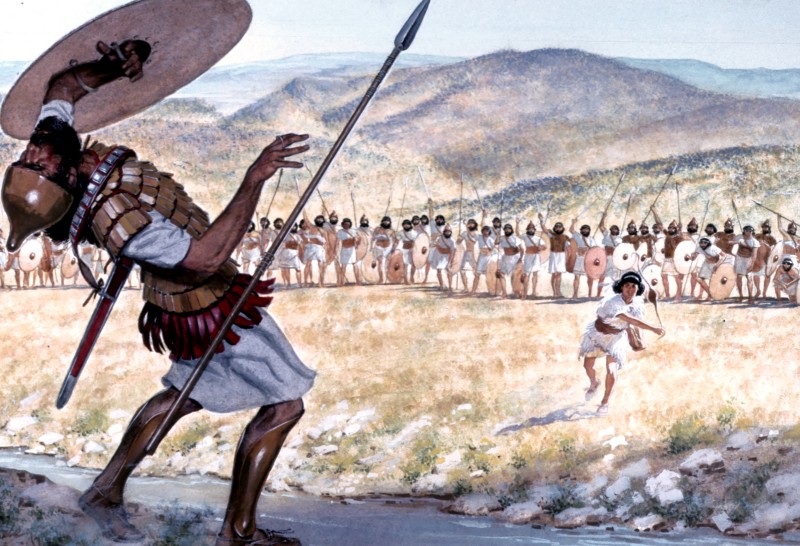
The oft fought battle between governments and individuals under their authority is usually referred to as a contest between David and Goliath. Everyone is familiar with the story of the brave shepherd boy who defeated the giant Philistine of whom the whole Israeli army was fearful.

David's argument in favour of taking on the spear wielding behemoth was that he was insulting God. Many men throughout history have waged wars to uphold God's honour believing they were directed to do so by God himself. The debate about this aspect of an allegedly loving God and his apparent warmongering has been raging for centuries.

The point is there are numerous examples in the Bible of out-numbered armies being victorious. The men who fought these battles drew courage from their faith, and earnestly believed that God wanted them to win and was calling them to fight. Popular modern thought labels such men zealots at best, or extremists at worst. Terrorists are at the very edge of this continuum of fundamentalism.

Leaving aside the issue of war and terrorism, and moving back to the topic of man versus the state, the same principle applies. People of faith like me, live as though God directs our steps. We pray for his leadership in our lives, for strength and solace in times of need, and for wisdom in times of decision making. Our question sometimes boils down to this: do I fight or stand down? Do I take up this cause? Should I do everything I can possibly do to solve this problem? Or do I wait and see what God will do?

On the 7th of December, 2018, my wife and I engaged the services of a lawyer and lodged an application for a sponsored partner visa. It was very expensive (the visa alone cost around $10000) and we could not have done it without the help of my mum. We followed procedure exactly, taking advice from our lawyer and completing each step of the process as required. There were long periods of waiting, but we knew it was going to take at least a year and maybe longer. We were prepared for that, and although at times it was very difficult, we were patient.

We didn't push anything or move outside of what we were instructed to do because we trusted the process and we trusted God. In January 2020, we had completed the application process and were informed by the department of immigration they were now ready to proceed, in other words to grant the visa. As it was an offshore application, my wife and children would need to leave Australia for the visa to be granted. Coinciding with the Tet festival, they travelled to Vietnam for three weeks, during which time we expected the visa to be granted. It wasn't.

I knew something was wrong, and I started to feel uncomfortable about just waiting. Friends were advising me to kick the can by contacting the department or the local federal member of parliament. Initially, I was reluctant to do this because we had only ever followed the process and waited. The question arose: should I continue to simply wait or should I take up the fight?

To cut a long story short, I decided to fight. A representation was made to the department by our federal member on our behalf which resulted in an explanation from a senior migration official, and an apology for the delay. Later that same day, we received another letter from the department saying that my wife and the children should leave Australia so the visa could be granted.

They were in Singapore transiting to Ho Chi Minh city when the visas were granted. It seems as though our intervention forced things along, although we can't be sure. Our very experienced lawyer described the final six weeks or so of the process as very unusual. His opinion on our intervention was that it would be unlikely to succeed but it couldn't hurt to try. I shared his view, but we were wrong.

Obviously, we are ecstatic. Our children can start at school and we can begin to establish some normalcy in our life, whatever that means exactly. We thank and honour God for this victory and for our entire love story which continues to prosper.

Now, however, I am faced with another struggle; this time against the tax department who illegally took tax payments from me, but didn't tell me anything until they had stripped me of around two and half thousand dollars. I've been waiting for the promised refund for over two months now. When I call them I get nowhere. Do I fight them? Or stand and wait?

This David is gearing up for another possible battle with Goliath. Excuse me, please. I'm off to find a few choice stones to do the job.


Friday, February 7, 2020

The Mirror: Lost in Space

Early in the 19th century, Johann David Wyss wrote The Swiss Family Robinson; a novel about a Swiss family of immigrants whose ship, en route to Port Jackson, Australia, goes off course and is shipwrecked in the East Indies. Wyss' purpose for writing the novel was to educate his four sons about family values, good husbandry, the uses of the natural world and self reliance. The family name "Robinson" is not used in the novel, but as it is modeled on Daniel Dafoe's genre birthing Robinson Crusoe, the title is in homage to the 18th century classic.

Fast forward to the mid 20th century when the inspiration flowed on to produce the science fiction series Lost in Space. John and Maureen Robinson, together with their children Judy, Penny and Will get marooned far from Earth. The setting changed, but the story was the same. A family faced with dangerous isolation has to work together to survive. It's a simple and very appealing idea. 1960's television shows were not renowned for sophisticated special effects, but the science (spaceships and aliens etc) only really had a supporting role.

In 1998, a terrible film adaption of Lost in Space was released. The special effects were a significant improvement on the 1960's television show, but it lacked character. Like many high tech films, it sacrificed substance for style.

When a new Lost in Space series was released in 2018 on  Netflix, I was naturally reluctant to watch it. The original TV series may have finished in the year I was born, but I had seen multiple replays and loved it. I ignored Lost in Space until season one had finished. However, it only took a few episodes for me to fall in love all over again. I've just finished watching season 2, and I'm calling it the best show I've seen since Travelers.

Although, differing in a number of ways from the original series, the Lost in Space reboot triumphs where many science fiction shows fail. Whether it's film, TV or books, I'm mostly interested in characters and relationships, and for me Lost in Space nails it. It has a lot of suspense and breathtaking action sequences which are magnificently supported by special effects, but it's really about the Robinson Family and how they grow stronger and closer together through adversity.

This is the connection: relationship. Leaving aside every imaginable variable, at the core of our existence lies the need for healthy relationships. The quality of our lives has a direct correlation to the quality of our relationships. We were designed to be together and we want that interdependence; we want to belong. Many obstacles and challenges must be faced, and pain is inevitable, but to survive, we need each other.

A colleague of mine criticized Lost in Space because it was 'just a drama in space'. Clearly, the show did not meet her expectations, but for me, I thought 'exactly'. That's why I like it. I feel it. I relate to it. No matter if we, (as represented by the Robinsons), find ourselves lost at sea, lost in space, lost in the jungle or the forest or just plain lost -whatever our circumstances; we grow stronger, wiser and better when we work together to overcome.

Friday, January 31, 2020

A Dog's Eye: absolute power

Google 'quotes about power' and there is one which is sure to appear on every list. Attributed to the nineteenth century Catholic historian, politician and writer, Lord Acton, it is often not quoted in full. He used these words of warning in a letter written to an Anglican Archbishop in 1887. These words became more poignant when Stalin, Hitler and other leaders of their ilk came to power.

"Power tends to corrupt, and absolute power corrupts absolutely. Great men are almost always bad men even when they exercise influence and not authority."

I discovered the context of this quote while reading Geoffrey Blainey's brilliant A Short History of the 20th Century  When writing about the mass colonial liberation movement post World War 2, Blainey quotes John Kenneth Galbraith who said "all of the great leaders have had one characteristic in common; it was the willingness to confront unequivocally the major anxiety of the people in their time."

This is not a comment on whether the leaders were or have been effective or not. Nor is it a judgment on their morality or lack thereof. It got me thinking though about leadership. In the 21st century, there seems to be a dearth of real leaders in our world. People are extremely critical, almost hysterically so, of Australia's Prime Minister, the British PM and the US President, just to name a few. I hear many people say we need real leaders, but I'm not sure I know what they mean or indeed, if they know what they mean.

I've been reading the books of Kings and Chronicles in which David, the second king of Israel features prominently. Interestingly, Chronicles has essentially the same content as Kings, but is written in a much more positive light (leaving out the story of David and Bathsheba, for example). I noticed in it some little things David did which showed leadership of a different kind.

Aside from wisdom, intelligence, strength and charisma, I
discovered in David's life some lesser known and often less valued attributes. Grace (mercy), humility and justice. (1 Chronicles 19:5, 21:17 & 21:24). I was reminded of the words of arguably the greatest leader of all time, Jesus Christ. Speaking to his disciples who were arguing about greatness in God's kingdom, Jesus, who is known as the Servant King, said;

"The rulers of the gentiles lord it over them, exercising authority. With you, it must not be so. Those among you who want to be great must be the servant of the others." (Matthew 20:26)

What is your idea of a great leader?