Showing posts with label snake oil. Show all posts

Saturday, July 10, 2021

Snake Oil: Bells and Whistles

Some time in everyone's life - multiple times throughout life in fact - difficult choices will present themselves. There are moments when decisions have to be made, important, pivotal points in time. The consequences of these decisions need to be considered when there is sufficient time for proper consideration. On occasion, we are forced to act quickly without proper deliberation.

Here's an example of a watershed moment which occurred recently in our lives. Everyone knows air fryers are a safe and healthy alternative to traditional oil frying. Having had countless hairy cooking sessions and suffered injury as well, my wife wanted to ditch the oil and go for the air.

So off we went to The Good Guys. The Good Guys at Warrawong are situated in a row of large homemaker stores. All the major furniture and appliance retailers are there, except Bing Lee. We chose The Good Guys for two reasons. First, our last appliance purchase had been there, albeit at the Millner store in the NT, and secondly because when you are travelling southbound on King St, as we were, they are the first appliance store you come to.

To cut a long and dull story short, we narrowed the choice of air fryers down to two; both Phillips brand air fryers. (Phillips invented the air fryer). The two fryers were identical in all but two aspects; colour and instrumentation. It was literally and figuratively, a black and white decision whether to chose the white fryer with a good old fashioned dial, or the black fryer with a digital control panel. The black fryer with it's numerous settings and bright lights was significantly more expensive. For me it was a no brainer. If the two appliances do the same thing, why pay extra for electronic controls?

It won't surprise you to hear, that my wife, as the chief cook in our home, had the final say and she chose the black one.

I'm totally okay with that. It's a great appliance which does what it is supposed to do and has certainly reduced the incidents of burns from splashing, spitting oil. I've even used it to cook pies because the gas oven we have, sucks.

My issue is the electronic component. All modern appliances have them. They have all the whistles and bells, including the twin musical dipsticks I used to joke about in relation to cars when I was young enthusiast.

The trouble with all these fancy electronics is they are noisy. Really noisy. They're intrusive rude, and a bit of a nag. Where one beep might suffice to tell me the microwave has finished it's job, several beeps insist I take action. I can't touch any buttons without loud beeping. I can see the display so the sound seems redundant. I suppose if I was blind, I would appreciate it, but come on. Why is the sound necessary? Why is it so loud? When you turn a thing on. BEEP! When you adjust the time, temperature or other setting. BEEP! When you switch it off. BEEP! I don't see the need for it.

Maybe it's how the appliance asserts itself, signalling its obedience, declaring its efficiency. Maybe, it's intended to be reassuring. It's making a loud noise, so it must be good. It cost a lot of money so it must be loud, and the display must be bright. There's a light on the USB charger in our car. At night, it's so bright, it's distracting. What is the real purpose of all these lights and beeps? Do we really need the bells and whistles?

The popularity of electronic controls on appliances suggests their desirability, if not their necessity. Or have we been fooled? Have we been seduced into believing that appliances with electronic controls are better? More powerful? Easier to use? More efficient?

In the opinion of the writer the whistles and bells only serve to make appliances more annoying. I'll continue to use them of course, including my second choice air fryer, but I'll also vainly tell them to 'keep it down' while lamenting the intrusion of yet more unnecessary noise.

Saturday, October 17, 2020

Snake Oil: Book reviews

What makes a good book review? Do you read reviews before you buy or read a particular book? Or do you read some reviews when you've finished reading the book? Maybe a little of both. Do book reviews influence your decision to purchase/read a book? Do you trust book reviews? Do you write reviews? Why or why not?

Despite predictions to the contrary, the book industry continues to thrive. Bricks and mortar book shops perhaps not, but there is no shortage of books being written, published, read and reviewed. In fact, in the 21st century, the digital publishing age, there are more books available than ever before. Many readers have switched to e-books only, but most use both paper and screens while only a few remain resistant to the use of technology. 

Book reviews are coveted by writers as one of the most effective weapons in their marketing arsenal. This is not only because they are usually free, but because they are personal. Advertisers are always targeting you, even if you belong to a specific demography, they are still trying to sell something to you. It's the power of a personal invitation, a personal call to notice what is missing in your life and recognize from where, or from whom that need can be met. A book review is no different to any other sales pitch. 

What makes a good review?

I've been a member and a reasonably active user of Goodreads since 2009. I've read and reviewed 328 books in that time. I also have an author page. I always try to keep my reviews quite short because I'm a fan of being succinct. I write like I shop. When I shop alone, I know what I want, I go and buy it and then I get out. When I write, I say what I have to say in as few words as I need to make my point, then I finish. Sometime earlier in the year, I taught a class called What a Novel Idea during which I taught my students how to write a good book review. I did some research and found a process which I thought was very simple and very effective. In fact, I still use this style.

  • I write a brief introduction to the review, and a description of the plot or subject matter.
  • I write about the things I didn't like.
  • I write about the things I did like.
  • I write a closing sentence with a recommendation.
Do you read book reviews?

I never read reviews of books before I read the book. There are three reasons for this. Firstly, I'm afraid of spoilers, and secondly, I don't want a review to prejudice me. For example, if a review suggested there was a certain fault with the writing style of the author, I would read the book in detective mode. This would detract from my possible enjoyment of the book. Finally, I have a general suspicion of book reviews. 

On the other hand, I often read some reviews after I finish because I'm interested in other people's opinions. I'm especially interested in hearing different perspectives on what I read. Themes I may have not considered, features of the story or the characters which I missed or didn't think relevant. Stuff like that.

Do you trust book reviews?

I think there are an impossible number of five star books on the market. If it looks like a duck and quacks like one, it's probably a duck. The preponderance of five star reviews looks and sounds like snake oil. I mentioned earlier that I've read and reviewed 328 books in the eleven years since I joined Goodreads. Among that number, less than 10% have received five star reviews. Three stars is a good read, a recommended read, a quality read in my opinion. Four stars is next level: now I'm impressed. It's a cut above. Five stars is the kind of book which frequently stopped me in my tracks, astounded by the brilliance of literary expression. Five stars means it made me feel something to the extent I actually laughed or cried. Or even felt anger or real suspense coupled with an elevated heart rate. Of the books below, only two received a 5 star review from me.


I could be simply a hard marker, or lots of people are super easily impressed, or...these reviews are rubbish. Snake Oil. Call me a cynic, but in the era of the e-book and POD publishing, competition for readers is fierce and five star reviews glitter like gold.

Do you write book reviews? Why or why not?

Especially for unknown writers like myself, I want to help, so I write general positive, but honest reviews for books I rate at three stars and above. If the book is not going to make the cut, I won't review it, but I will reach out to the author with some constructive criticism. If the author is famous or dead, or both, I don't feel the review has as much clout. Certainly not with the author and probably not with any of that author's fans. Neither a good review or a bad review is likely to be noticed. So why do it? Just to join the vox populi? Out of habit? Yes and yes, but also writing a review helps me to remember what I want to remember about that book.

I always ask people who buy my books to review them, but very, very few do. I guess by faithfully reviewing all the books I read, I'm making myself more comfortable with requesting others to do that for me. So now, you're wondering why I care when I said earlier in this post that I thought reviews were generally not trustworthy, and in my case had no impact at all on my decision to read a particular book or not. Again, it's probably my wave of making sure that when I criticize others for snake oil book reviews that I maintain my integrity by writing genuine ones.

How would you answer my opening salvo of questions? I'd love to hear your views.


Sunday, August 9, 2020

Snake Oil: Two monumental lies

I believed two lies which informed my life practice for decades, underpinning every decision I made. I learned these things indirectly, by observation and experience, and in the case of one of them, I was so deceived that I didn't even realize I was enslaved to a false and harmful philosophy. Both parsimony and lasciviousness ruled me as secret tyrants.

While these powerful, yet hidden lessons controlled me, I proclaimed my normalcy. It is not an unusual thing for a man to be careful with money, especially if he has a family to support. Saying no is a crucial sign of strength. It is also quite normal for a man to be frequently having inappropriate thoughts of a sexual nature, and even acting out these thoughts in some way. Saying yes is a crucial sign of strength. I learned these things from my father.

1. A man is not generous. He is stingy and controlling.
2. A woman is a thing for a man's pleasure. In sexual matters, a man does not deny himself, and women should accept that.

To be fair, Dad improved with age. he mellowed and became a better man. When he died, I lost one of my best friends. I still miss him and the great friendship we built over my lifetime, through many challenges. But dad taught me to be mean with money and to objectify women. 

I believe I was in my forties when I read this verse in the Bible: "One gives freely, yet grows all the richer, another withholds what he should give and only suffers want." (Proverbs 11:24)  I had considered myself a good steward of money, prudent and sensible, but upon reading this verse God told me I was stingy. I have been working on becoming more generous ever since.

In 2015 with my marriage over, partially as a result of infidelity on my part, I was sitting in church when an ad popped up on the big screen during the announcements segment. Upon hearing that this course, called Valiant Man, was about sexual discipleship, I felt God wanted me to do it. The course switched the lights on, exposing my slavery to the god of sex, and ever since I have been working on becoming a better man, a purer man, an honorable man who respects women.

One of the things I learned in the course was the value of emotional honesty and humility. Recognizing my behaviour in the arenas of 
money and sex, I had to admit I was a long way short of where I wanted to be. I wanted to understand myself and I wanted to change. I wanted, and I still want truth to change me.

In the individualistic and hyper-eroticized West, money and sex have become weaponized commodities. The great lie is that this is okay. This is the lie I believed most of my life because my father lived it out in front of me. I swallowed the snake oil, but I didn't know any better, nor did he. Now I've spat it out and rejected the lie.

Saturday, January 25, 2020

Snake Oil: Loose with the truth

Facebook posts ads on our walls based on our previous searches, likes and other interactions. I get a lot of advertising for flights and holidays because I've traveled quite a lot over the past couple of years. Jetstar has frequent sales and they target me for trips to Vietnam. The advertised prices are ridiculously low, and as it always turns out, the flights are only available on a very limited number of specific days...or perhaps not at all, as I've discovered sometimes.

I do online surveys, and have done for some time. I earn points and redeem the points for Paypal dollars with which I buy books. It's a sweet little pocket money generator. Facebook started hitting me with ads for another online survey mob called Surveyworld. The thing is they didn't advertise themselves as an online survey company. They were looking for males in my age group to test products. (Wow! How did they know my age?) I clicked the link and was forced to join an online survey company. There was nothing on their website or in the flood of emails which followed about product testing.When I could not unsubscribe, I had to block the address.

A final example involves an immigration agency which advertised free consultations with their lawyers. It was free until they actually connected me to a lawyer and then they dropped the fee on me. I declined and told them their advertising was dishonest.


Having won the lucrative broadcasting rights from Channel 9, Channel 7 has boasted of being Australia's home of cricket. Australia's old home of cricket-the only one I'd ever known- used to show all the international cricket matches in the Australian domestic season. The new home of cricket only shows test matches. It also purports to be the home of the very popular big bash T20 league (now in its ninth series), but it doesn't show all the games. This is advertising; the false or only partially true claims of those trying to sell us something.

Television programs are always promising the best of everything;
the scariest, the funniest, the most exciting or entertaining. The word 'ever' has suffered a thousand deaths and still suffers abuse as a zombie adverb.

That advertisers and television promoters at best exaggerate and at worst lie about what they are offering is a given. We know that. However, people are loose with the truth as well, and sadly we expect that now. We hope people tell the truth but often suspect they aren't.

Is it any wonder that truth is now so flexible? So situational? So relative? Why are we surprised by this prevailing lack of honesty when we are surrounded by lies in the media, both the terminally ill traditional media, and surging social media. Most thinking people have a default doubt setting nowadays.

I rang the ATO to tell them I had mistakenly received thousands of dollars. They were shocked and promised to investigate. Nearly four months down the track nothing has happened. The same government department took money off me every fortnight for nine months before admitting the error and assuring me they would return my money within four weeks. That was in November. Guess what? I'm still waiting. When I switched to Dodo mobile they promised me 'all systems go' no more than three days after I activated my SIM. Two weeks later, I finally had a fully operational handset.

I could go on with many more examples, but I trust I've made my point. I want to be believe everyone who tells me something, but I can't. I want my default setting to be trust, but I know that will likely only hurt me.

It's very sad that the concept of relative truth is so entrenched in our thinking. In the 21st century, most people echo Pontius Pilate's famous 1st century words. On the day he was crucified, Jesus challenged Pilate to accept the truth of what he was saying and who he was. Pilate's answer: "What is truth?"

Well? What's your answer?

Saturday, November 30, 2019

Snake Oil: Up to 70% off

A special price used to be...a special price. A once a year sale used to be...a once a year sale. Back in the day a product could outsell competitors on the strength of a good advertising campaign alone. There was once much less competition; much less choice, much less confusion and much less danger.

I recently searched for an NBN provider for home WiFi. Initially I used an online comparison website, but it only told me that each of up to a dozen companies offered basically the same thing for roughly the same price. I figured out exactly what I needed, and that NBN was available at my place. (FTP:fibre to the premises to be precise). I then called each of the companies to ask why I should sign with them. I'll give the two extremes. Company A answered with silence. Company B offered me $5 dollar off the advertised price for the particular plan I wanted, waived the delivery fee for the free modem, and offered me a month's free internet if I switched my mobile phone to them. Their phone offer was the same price as my existing plan, but included more data, unlimited SMS overseas, as well as 120 minutes overseas call credits.

To get more customers, companies offer all sorts of deals, but to do even better than the advertised specials, you just have to ask. It's totally worth a call. I do the same thing for my insurance policies. Various companies also run event sales: End of Financial year. Halloween. Christmas. Boxing Day. New Year. Australia Day. I'm writing this on December 1. Most of the Black Friday sales are winding up today and tomorrow. Black Friday is on December 13, but never mind. Close enough. Any excuse for another sale.

The fact companies can offer all these special prices and special sales indicates that by and large they are overcharging their customers. In bricks and mortar stores, crazy prices are often advertised. Some places are always having sales and perpetually offering special prices. You will never enter a shopping mall and not find most of the shops having sales. In supermarkets, the sale items rotate but there are always a huge number of items on sale. My supermarket of choice always sells a large variety of products at 20-50% off. Clothing stores boast of half price, or two for one offers. I've seen shops selling products at 75%. If all this is for real, they can't make money, but of course it isn't. It's snake oil: a barrage of clever marketing tricks which most of us have fallen for at one time or another.

The advertised special prices and sales are hooks, and we consumers are fish. Sales get you into the store or onto the website where hopefully you will see something you like, and spend more money than you intended. Companies rely heavily on impulse buyers; people who buy things because they are on sale irrespective of whether they want or need the product, or indeed if they had even given a thought to it previously. The bait is dangled and we bite.

Successful businesses know all the tricks and employ them strategically to maximize sales. Knowing this helps me to control the materialistic urges within me. Utilizing my own set of countermeasures, my advertising snake oil anti-venom, means that even if I don't always get the best possible deal, I will at least be satisfied that I haven't been duped. I'll also minimize the risk of PPR (post purchase regret) 

Here are my top five PPR prevention strategies.
  1. Shop around
  2. Negotiate as much as possible
  3. Use shopping lists
  4. never spend more than you planned to.
  5. Don't make spontaneous purchases.
Do you have any strategies of your own? Share them here.

Saturday, July 6, 2019

Snake Oil: education solves all problems

I wonder if anyone believes that education solves all problems. Education solves problems, education provides opportunities, education is a worthy and useful pursuit, but it is not a panacea. C.S.Lewis said it best.

What values underpin the rationale behind and the aim of public service announcement ads? I suggest a shared community value of respecting other people's three Ps: person, property and peace. These types of ads are clearly designed to educate people, unlike most ads which are designed to persuade people to spend money on things. Advertising is all about influencing people. Public service ads attempt to change people's behaviour. The problem is that the people most likely to pay attention to these ads are those who agree with the message of the ad, and are already doing so.

The ad I'm particularly interested in at the moment is a message from Darwin City Council about responsible pet ownership. What are the chances that irresponsible pet owners are going to see this ad, repent and turn over a new leaf? For starters they probably can't even hear the ad because their dog is barking and they're vainly yelling at it to stop. When people buy pets, they generally know what they are in for: some degree of trouble. When they buy puppies, they've got a good idea of exactly what sort of trouble they're in for, and what they can do to prevent it.

Nuisance behaviour is preventable. That's the main message of the  ad. The slogan says "Good pets start with you." Does anybody not know that? Does anybody not know that if you don't train your pup, it will become a pain in the neck? If I owned a dog, I would at least attempt to train it. I don't want to deliberately make my life more difficult, but that's exactly what people do. With dogs, I'm sure people have the best of intentions, but life gets in the way. Or maybe it's sheer laziness. Perhaps it's delusion.

I have been a victim of nuisance behaviour by animals many times in my capacity as house sitter. I am the victim of nuisance behaviour right now by Whiny McBarkenstein. I'm helpless to change this behaviour. I can only deal with it as best I can. At most I spend three or four weeks in some one else's home looking after their pets. Often it's less than a week. Powerless I sit, watching these ads about dogs acting badly, and shaking my head.

The one shining light in all this-there are several actually; the truth is that getting into house sitting which I've been doing full time since April 2018, has saved my financial bacon. But the other thing house sitting has done is fire up my writing. This blog post is a brief sample of my WIP which is called I Used to be an Animal Lover. As my wife said when I was complaining about not being able to sleep because of the dogs and a rooster, at least I have a lot of ammunition for my book.

I've already completed 34,861 words of the first draft in just twenty days and I'm loving writing more than I have for quite a while. In the process,as is always the case, I'm learning lots of fascinating things related to animals, and as the book is part memoir, I'm also doing what all writers do; dealing with demons in my head.

Finally, back on the ads. I think they reinforce good behaviour in those who are already behaving properly, according to a shared community value. (respecting person, property and peace).The ads do not change the behaviour of people who don't. I'm not sure many people are even capable of acquiring new values.

Friday, March 22, 2019

Snake Oil: Maltesers best weekend

Image result for maltesersI was beginning to think I had this all wrong until I Googled the ad I'm going to talk about, and discovered it was the subject of an official complaint to the Advertising Standards Bureau. In short there were a couple of interpretations of this ad which deemed it inappropriate. Then there was Mars Confectionary's official response. I suggest you read it, both for a laugh, and for an absolutely perfect example of snake oil.*

Some people, including myself, read a sexual inference in the Maltesers television ad. Naturally that says something about me, but I own that. Other people saw an obvious reference to drugs, as in pill popping. The company says it is simply about women sharing stories of fun weekends while enjoying chocolate during an office break. They're just bonding.

Everyone knows advertisers push the envelope. Many over the years have used blatantly inappropriate ads; unconcerned about being fined and having the ad pulled, because the short term impact from running a controversial ad is often worth it. Controversy equals publicity which usually works in the company's favour. Usually.

I've seen ads which I have been offended by, and as a result made a decision to not purchase that product. Although I like them, I don't buy Maltesers often. Now I don't want to buy them. Whether it's my fault for immediately connecting multiple Maltesers with multiple sex partners is a little beside the point. Accusations will follow, but, as Sam Smith sang so well, albeit in a different context, "I know I'm not the only one." Speaking of "not being the only one", Maltesers have produced a number of ads with even more obvious sexual references, so they have a track record here.

I watch ads with a critical eye. I sift them through my world view. I'm interested in what they say about people, in what emotions they appeal to, and what needs they are trying to meet.That's how I roll. Here's the ad if you haven't seen it. What do you think?


Bonus material: One young man's amusing commentary on some Maltesers ads. Language and sexual references warning, but pretty much on the money. 

*The term "snake oil" is being used slightly out of context here. I'm stretching the definition to cover all deceptive and/or offensive advertising.(according to me.)

Wednesday, May 23, 2018

Snake Oil: make your own rules

Image result for powerball australiaDespite the astronomically small chance of winning the major prize, a massive number of people continue to religiously invest in the dream of future wealth by buying lottery tickets. I think I bought a few a long time ago, but these days my 'gambling' is restricted to an NRL footy tipping competition which doubles as a fundraiser for the Multiple Sclerosis Society.

Naturally, advertising for the various versions of the pick the lucky numbers game doesn't mention how heavily the odds are stacked against you. It's all about the dream. How your life will change dramatically for the better when you win.

The latest television ad for Powerball is the least appealing one I've ever seen. (I apologize for using the most abused adverb in the English language: 'ever'. I hate what they've done to you poor 'ever'.)


The scene in the ad is a party in a lavish mansion, attended by all manner of unusual and interesting types of people. A song is playing. The repeating line is there's a beast inside you. A guy shows up at the end to deliver the tag, the catchphrase. Powerball: play by your own rules.

So when I am rich, I can make up my own rules? Hmmm...aren't the rich already doing that to some extent? Haven't they always done that? Won't they always do that? Do you want to join them? I want in. I want to be a member of the wealthy and powerful elite for whom money is the answer to every problem. It's probably enough that you can go to fancy parties, isn't it? That's all I need. I need money, and a truckload of it, so I can live the lifestyle of the rich and famous, and make my own rules...and go to parties.

Let's all make up our own rules, and hope the values we hold which will necessarily underpin those rules, align at least to some degree with the rules of others. I'm sure they will. She'll be right mate.Let's do away with such anachronisms as rule of law. We live in a post modern age so absolutes are for fools. You decide what's true and what's right, and use your millions to make sure any dissent is extinguished.

Play by your own rules? Sounds awesome. I'm off to use all of my disposable income to buy Powerball tickets. Stuff it. I'll go without food this week so I can buy more tickets and increase my chances of winning. It's only a few days until I get paid again, and I desperately want to play by my own rules. Who's with me? 


Tuesday, April 17, 2018

Snake Oil 2: Dentist Messiah

Image result for dentistDentistry is a hard sell in Australia for two very good reasons. Firstly, it is outrageously expensive. I've lost count of how many people have told me they would rather fork out for an airfare and include some dental services in their holiday plans than have the work done here. Secondly, visits to the dentist involve some degree of physical pain and discomfort. Many people don't go to see dentists until they have to, and even then they may choose not to.

A good smile is said to be a desirable thing and, at least superficially, a good smile is said to require good teeth. Some are born with great choppers while others are not. In the latter category are those who shell out for a makeover: cosmetic dentistry, while others, either by choice or necessity, deal with the enamel coated cards they have been dealt.

Image result for smilesAccording to the ad which inspired this post, smiles are good for health, and good for relationships. In fact a smile can change the world. However, to really make an impact and to be happy and have a better life, you need a beautiful smile; not just any smile. You need an amazing, brilliant smile. Such a smile equals confidence and confidence means power.

It's hard to deny the attraction of a good smile, the eye-catching brilliance of straight shiny pearly whites, but I'm not sure you need good teeth to have a great smile. Generally, I think smiles are beautiful, but do you need good teeth to have a good smile?

I've thought about having my teeth done. Coke-cola and cigarettes have taken their toll so if money wasn't an issue, I'd probably give it more serious consideration. But what would it really do for me? Are immaculate molars, capital canines and incredible incisors really the key to a fantastic life? If I'm to believe the snake oil salesmen, then obviously the answer is yes. Would you consider cosmetic dental work? Have you already had some done? How did it impact your life?

Sunday, March 18, 2018

Snake Oil 1: It's available in many bright colours

Kia have improved their reputation over recent years, as have many bottom end Asian cars. Remember the days when Toyota, Mazda and Nissan all produced cars which were commonly described with the unflattering and somewhat racist epithet: "Jap crap"? You don't remember? Well, I was there, believe me. My peers only bought big cars, usually Holdens or Fords, with big engines, and we derided Asian made buzz boxes for their low quality and poor performance. They were the antithesis of cool.

Hyundai was the next Asian manufacturer to enter the fray. South Korean "Jap crap". Look, when I was in primary school I thought Asia was a country. Anyway, Hyundai has now transitioned from lowly regarded buzz box to popular, high quality vehicles for everyone. 

There are many others of course. In Australia, you can buy cars from all over the world, but I'm getting off track. I wanted to talk about Kia, another of the South Korean vehicles available Down Under.

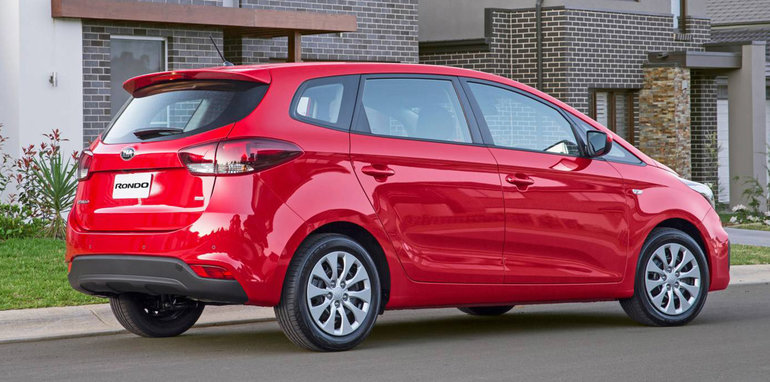
Image result for 2017 kia rondoKia has a current ad on TV for the Rondo. It's a new model, but evidently all the consumer needs to know about it is that it comes in different bright colours. Of course, it is very typical for car ads nowadays to focus on looks and lifestyle rather than unnecessary mechanical specifications.

The ad features a Rondo going through a car wash, and then being accompanied outside the car wash by giant dancing mops. It makes me laugh. I know it is only designed to get me interested enough to do some research online or go to a dealer, but I wonder how successful this ad has been/will be.

Advertising is a funny beast, but it got me thinking about my choice of car. I picked my current car because of its appearance. I trusted the Ford brand, so really I only cared about the price and how good it looked. Taste in car styling is an individual thing, but I suspect very few people buy cars which are visually unappealing to them. Damn, we really are a superficial mob, aren't we?

Why did you choose your current car? Have you ever purchased a car just for its good looks?