Showing posts with label racism. Show all posts

Wednesday, August 17, 2016

If the hat fits...

Stereotypes are an interesting thing: a necessary evil perhaps. I'm really keen, wherever I go and with whomever I talk to, to be a champion for open-mindedness. I often challenge people who put others in boxes and attach simple labels to them. I don't like it because I think it's unfair to judge people when we have such limited knowledge and experience. They guy who told me 'hated' all Chinese people because he'd had a bad Chinese cab driver is an example of the narrow minded prejudiced which I detest.


Many non-indigenous Australians believe that Aboriginal people are lazy drunks. They'll make exceptions for their sporting heroes, but generally hold a very dim view of indigenous people.

Not having much experience with them, I have tried to keep an open mind and be positive about this most disadvantaged group of Australians. I'm aware, of course, of their significant problems with alcohol, their over-representation in our jails and their low life expectancies, but indigenous people with public profiles don't have these problems and present themselves as positive ambassadors for their people. I have great sympathy for the Stolen Generations and I have gained a greater understanding and deeper respect for Aboriginal culture.


Before moving to Darwin, I was aware that there would be more Aboriginal people than I was used to in Wollongong. What has surprised me and disappointed me is how many drunk and disorderly indigenous people I have seen. In the streets, in parks and on the buses, a majority of them have fit the negative stereotype. At any time of the day, they'll be hanging around in groups, drunk or drinking, talking loudly and arguing among themselves in their native language. Many of them don't wash and they smell awful.


These experiences have disturbed me, and I have felt not only uncomfortable at times, but also intimidated. I've been humbugged for money and cigarettes frequently, and I feel quite sad about it. I'm seeing and hearing a lot of stereotypical behaviour which, as I said, I find really disappointing. They are many tourists in Darwin at the moment, and I wonder what they make of the behaviour of the first Australians. If I'm struggling with it, I wonder what messages our visitors are receiving and sharing with their family and friends.

I came to Darwin hoping to find some evidence to destroy the negative stereotypes of indigenous Australians. I'm still looking.


Tuesday, December 2, 2014

Post Nuptial Assessment 5

I wonder if there would be less racists if more marriages were interracial.You may have a view on that. You may be one of those strange people who live in the global village of the 21st century yet still believe in the superiority of one race over another, or one of the moderately more understandable people who fear what they do not know or understand, and therefore avoid, denigrate and discriminate against those who are different.

What is the connection to my cousin's wedding? He and his new wife recently returned from their honeymoon in New York. Now there's a city which knows something of cultural diversity and yet within multicultural societies, like New York and Sydney, the seeds of xenophobia thrive. What can prevent the weed of racism from strangling the flowers of interracial love and harmony?

My cousin married an Indonesian lady so the wedding not only joined two people together, but also brought two cultures together. People had travelled from far and wide to attend the wedding: from Indonesia, the United States, the Northern Territory and Victoria. They came together for one purpose and differences meant nothing. What differences may have divided were forgotten, and those which were manifested like the Indonesian dancers who performed for the wedding guests, only served to enrich the experience for everyone.

Sensible people acknowledge that life is enhanced significantly by diversity. An appreciation of, and respect for other cultures makes life more interesting, and facilitates harmony. Generally people marry people from their own race, their own ethnic background and although perfectly understandable, this promulgates separateness, and strengthens the tribe mentality. Tribes by nature war against each other. 

Most people want peace but either ignore, eschew and resist those things which lead to peace. Are more interracial marriages the key to the destruction of racism? It can't hurt, can it?

Photo sources:
http://www.quickmeme.com/Support-Interracial-Marriage
https://truthpraiseandhelp.wordpress.com/tag/interracial-marriage/


Saturday, July 19, 2014

A Grumpy Old Racist

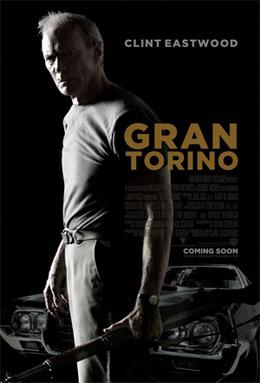
In the superb drama, Gran Torino, Clint Eastwood's character, Walt Kowalski, is not at all a likeable man. This retired auto worker has a gruff disposition, a snarling visage and a narrow mind. He's a grumpy old racist. He also carries deep scars from his time as a front line soldier in the Korean War. At the beginning of the film we see him at his wife's funeral. She was possibly the only softening agent to have had any effect on him.

Hard as nails Kowalski, who uses abusive language for sport, remains alone in his house after his wife's death and battles on in the torpor of his grief and loneliness. He busies himself with the maintenance of the house and is devoted to his 1972 Ford Gran Torino which he helped to build, and his labrador, Daisy.

An unlikely friendship with two young Hmong people who live next door provides an opportunity for Walt to change, to open his mind, and to eventually have an epiphany which leads to him making the ultimate sacrifice. Sorry for the spoiler if you haven't seen the film, but if you haven't....may I ask why not? It's a must see film. Don't miss it.

I showed this film to my class of adult migrants, and it was interesting to see their reaction to the clash of cultures, and the power of common humanity to smash preconceptions and facilitate beautiful relationships. Sometimes it takes catastrophe to jolt us out of delusion, or to snatch us from the dark path which leads to nowhere. The catalyst for Kowalski's revelation that violence only begets violence was the brutal treatment delivered to his young friend as payback for his own actions.

Walt felt that his death was the only way to right the wrong. He was not to be a part of the new brighter future that he would help create for his two young friends. He would no longer share their triumphs, no longer provide guidance or comfort. He would never know what became of them, but he gave his life trusting that his sacrifice was worth the cost.
Members of the public and pro-Russian separatists have been able to access the crash site without restrictions, raising fears the site has been contaminated.

Two hundred and ninety eight people were murdered on Malaysia Airways MH17. My sincere condolences go to the family and friends of the dead. Grief will torture them, and they will ask questions which have no answers. Their lives have been forever changed by this act of terrorism. Death is the ultimate reminder of our fragility.

Have you ever experienced a life changing epiphany? Ever realized suddenly, by virtue of some disaster or tragedy, that you were totally on the wrong track? Please share you story with us.

Photograph sources:
http://www.smh.com.au/world/mh17-crash-site-freelance-journalist-filip-warwick-reveals-grim-first-views-20140719-zurxu.html
http://thegrumpysociologist.blogspot.com.au/2009/06/hegemonic-masculinity-run-amok-in-gran.html

Monday, April 28, 2014

X is for Xenophobia

X is for Xenophobia

“Fourteen dead and six more critically wounded. He was still unable to interpret these events, to decipher the implications. Border protection had never been so deadly. It had never come at such a cost. What did it mean in terms of the perceived increase in people smuggling activity through Australia’s northern seas in relation to the heightened awareness of every citizen. Australians were xenophobes. He knew that. He’d experienced racism first hand, but he did not hold it against them. Even the word ‘them’ made him cringe. He was one of them. Why could he not think, automatically of us, rather than them? We, he thought to himself, deliberately correcting, are no different to any other nation on Earth. Filled with people who are afraid of what is different and of what is unknown. 

He finished his cigarette quickly, suddenly aware that he was wasting time.”
From chapter 3, Ashmore Grief

Racism is much more prevalent than most people care to admit. Many racists would not even consider themselves to be xenophobes even when uttering statements which are introduced with the phrase, ‘I’m not a racist but...’ Most people hold prejudice in their hearts and although they are not necessarily aware of it, it influences they way they think, behave and speak.

My wife was born in Thailand. She has lived in Australia for over 20 years and is a citizen. She earned a nursing degree here, and is now working in the Renal Unit of Wollongong Hospital. A qualified and competent professional, as well as a compassionate person and a diligent worker, she still experiences racism. People presume certain things about her because of her appearance and they equate her accented English as sign of inferior intellect. She has driven herself hard over many years of study and labour to prove herself good enough, and is only now learning that for some people, there is no such thing as ‘good enough.’


Xenophobes are ignorant and narrow minded people who discriminate against people and treat them disrespectfully, and in some cases, worse than that. Regardless of superficial physical differences, or cultural or religious differences, people are the same. We always have been and always will be. We have the same basic needs for food, shelter, love, security and purpose. When we fail to see and appreciate our commonalities, we are both blind and stupid.

Photo sources:
http://blog.ryding2health.com/2013/06/02/daily-post-silver-linings-racism/
http://www.astrologer.com/tests/racism.htm

Tuesday, April 15, 2014

M is for Migrants

M is for Migrants

“‘I understand the strength of emotion that causes people to behave improperly, to use rash, angry words and to resort to violent actions. I understand the deep empathy which brought you all here today. I also understand what drives people from their homes to risk their lives on such uncertain promises as made by unscrupulous smugglers, exposing themselves to untold dangers. Do not forget that I am a boat person. I arrived in this beautiful country as an illegal immigrant, a queue jumper, courtesy of the money my father paid to a smuggler. I do understand the issues. The concern of course it how to get the balance right. Neither an open door policy, or a turn the boats around policy will suffice to humanely and justly manage this complex problem.’

He paused, and inhaled the anticipation of the audience. With the protestors long gone, and the juice stains drying nicely on his suit, the time had come to close his address. It was vital that he leave them hungry because he had more to feed them later, when he was ready.”   from chapter 6, Ashmore Grief

Australia is a migrant nation. We have been dependent on migration for growth since Arthur Phillip led the First Fleet into Sydney Cove in 1788. Beginning with convicts and a smattering of free settlers, through the Gold Rush which saw 600 000 people come to Australia from all over the world, to federation in 1901, when migration policy began to be dominated by the infamous “White Australia Policy” which effectively ended Asian migration for fifty years. 

The end of the second world war caused another dramatic shift with then Prime Minister, Ben Chifley declaring that we should “populate or perish” (my paraphrase). A Department of Immigration was established and Australia began to accept significant numbers of refugees from Europe. In 1972 with the coming to power of the first Labour government since 1946, the racist quota system was replaced by something called ‘structured selection’ whereby migrants would be chosen according to social and personal attributes, and occupational group rather than country of origin. Three years later the first ‘boat people arrived and Australia experienced a wave of refugees from Southeast Asia, principally Vietnam and Cambodia.


Despite Australia’s incredible ethnic diversity, (around 50 statistically significant ethnic groups) and our continued record of successful and peaceful multiculturalism, the hysteria surrounding our current crop of illegal boat arrivals demonstrates the xenophobia which lies beneath the surface of our smiles. Roughly one in four Australians were born overseas, and sadly, this still bothers too many people.

Photograph sources:
http://www.imagegroup.com.au/our_services.asp
http://www.defenceanglicans.org.au/was-he-gods-messenger/

Saturday, August 7, 2010

The Devil and the Deep Blue Sea

Being serious about the exercise of my democratic right to vote in the upcoming federal election has caused me to think more carefully than ever before about the options. More than that I have had to consider whether I really do have choices.

The Labour Party and the Coalition are the two main parties and one or the other has ruled Australia for my whole life. No other party is large enough to even win an election let alone form a government. Our system requires the winning of a majority of seats (electorates) in a majority of states. The minor parties, and independent candidates may win seats but they can't form governments. The value of independents in the parliament is a debate for another time but from the point of view of the voter, you have to determine whether the person you elect to represent you in parliament is actually going to be able to achieve anything if they are not part of the government or at least a major party.

Running my eye over the options I am left without a party I can call my own. One that truly and totally represents my point of view and one which can achieve things for me locally and nationally. When nobody completely measures up, I am forced into a choice between lesser evils. I am stuck between the devil and the deep blue sea.

A vote for the Coalition gives me a government led by a man who I feel is 'not right' for the job of Prime Minister, and which doesn't like spending money until election time. Their obsession with surpluses is annoying, to put it mildly. A vote for the Greens will give me a carbon tax amongst a host of other extreme environmental policies, soft immigration policies and same sex marriages. I tried Family First, although the name is strange given that the importance of the family unit to a functional society is universally held and self evident, but they don't have policies. They have general statements of principle which I happen to agree with but they don't have any policies. Respecting Rev. Fred Nile as I do, I checked out the Christian Democrats and again courtesy of fundamental shared faith in Jesus Christ, I found plenty with which I could agree. However, their policies on drugs are too hard in my view, almost graceless and some of the CDP's rhetoric on immigration issues borders on racist. And what economic credentials do any of the minor parties have? Finally I return to what has been my default position since I began voting twenty four years ago:The Australian Labour Party.

With the ALP I have a poll driven wishy washy government which has fallen into the sustainable population trap. A government led by someone who modified her public persona and bored us all as soon as she wiped the blood off the knife. This government conducts endless reviews and commissions of enquiry but doesn't act. Their response to the Henry tax review was disappointingly underwhelming.

I need a party with the clout to succeed. The strength and courage to rip the big changes which are necessary to keep Australia the ridiculously prosperous nation that it is. I want people to be put first. I want compassion and grace. I want Christian values because those who love God and people, have positively and immeasurably transformed the world. Governments should pour resources into education, health and public infrastructure. I want a passionate and brave leader who inspires me and makes me proud to be an Australian, and who leads a government which is strong, clever, competent and compassionate.

Daryl Kerrigan might tell me that I'm dreaming but I am happy to admit to being an idealist. Is the Labour Party led by Julia Gillard whom I have always admired as a leader, what I am looking for or will I simply have to settle for second best?

Yours Truly,
Undecided.