Every now and then the elephant driver would appear to get a little frustrated with the beast beneath him. He was sitting on the elephant's neck, one leg on each side with his knees cocked behind the pachyderm's huge ears. When it slowed down or stopped, the driver would bounce on its neck and nudge it behind the ears while repeating some words of "encouragement".
 I was with my mother and my daughter on the elephant. We sat in a relatively comfortable howdah with an umbrella to protect us from the sun. I was not worried about this journey even though I didn't know where we were going and how long exactly we would be gone. The other two passengers were far less sanguine. We traveled down a road through a lakeside village, in Vietnam's central highlands, and then entered the lake down a steep "ramp". Occasionally, the water was up to the elephant's shoulders which left our feet just above the water line.
 We wore life jackets in case of an accident, and I'll admit there were a couple of times when I thought we might be having an unplanned swim. After roughly half an hour we finished our ride and climbed down on to solid ground, connected to it by the security of our own feet.
It required an element of faith for us to ride this mighty creature. We had to believe that it would behave itself, and if it didn't, that the driver would be able to control it. Being a visitor in an overseas nation, and being able to enjoy that experience also requires some faith. Control ebbs away under the direction of locals who, despite some language obstacles, we trust. In our case, my wife was in complete control and what a champion she was. She did an amazing job of organizing things for us and protecting us from being ripped off. It was relatively easy to trust her. I mean I married her, so...
Nevertheless, there is a sense in which having to trust others makes us feel uncomfortable. Allowing others to make decisions for us, takes away our power, it violates our independence. For some people, the land of interdependence is a foreign country they have never visited- nor do they wish to. Taking risks with their safety based solely on the assurances of others is anathema to them.
How much is lost to a person who allows fear and/or a desire to stay in control rule their lives?
Towards the end of our Cu Chi (pronounced goo jee) Tunnel tour, as we headed back to the bus, I stopped to sign the visitor's book. Bich had pointed it out and asked me if I wanted to write something. I said yes- would a writer ever say no to an invitation to write something? As I kept writing, Bich asked me to hurry up because our fellow tourists were probably waiting for us. When I explained to her the danger of offering a pen and a blank page to a writer, she smiled and nodded.
That little event neatly highlights two things about my recent trip to Vietnam. Firstly, the continued blossoming of our new marriage relationship, and secondly, the difficulty of nutshellizing my holiday. It was so great - undoubtedly the best holiday I've ever had -that it's hard to know where to begin recounting all the wonderful experiences I had. Therefore, I am not going to do that. Instead, I will offer just a few snapshots.
Fifteen million people live in Ho Chi Minh City which most locals still refer to as Saigon. It's a crazy, crazy town with so much to see and do. It struck me one morning late in my second week, as we were en route to meet my mum and sister at the Ducati dealership, that I had never experienced a traffic jam in Saigon. Despite the huge volume of vehicles, mostly motorcycles, and their chaotic movement, it flows. Regardless of the near misses, swerving, and the use of handheld devices by many drivers and riders, I never saw an accident.
 I know they happen - Bich had two minor accidents in one week prior to my arrival - but I was on the road for many hours, and I never saw any collisions. Even when observing from the footpaths, which are not at all people friendly (motorbikes use them, as do ubiquitous street vendors), or from the safety of one of Saigon's countless cafes and restaurants, I never saw anything go wrong on the roads.

It looks for all the world like a road system destined to perpetual choking, frequent accidents and road rage. But it works. With cars and motorbikes moving in all directions, not driving in lanes (because there usually aren't any) and right of way always taken, not given, Saigon's traffic should be a basket case...but it isn't.
This is only one amazing aspect of Vietnam: a country to which I am now perpetually bound courtesy of God giving me an angel from Saigon as my wife.
A video came up in my news feed on Facebook this morning of a guy reviewing some spectacular football 'dives'. Overlooking the liberal use of expletives, it was quite funny so I shared it. I had already been thinking about this issue for a few days, since Australia lost to France in their World Cup 2018 opener.
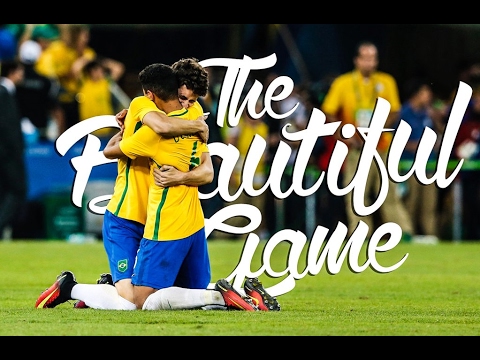 Football, or soccer as we call it here and in the United States, is truly the world game. The FIFA World Cup is a larger event than the Olympic Games.With an estimated global television audience of nearly half the population of the whole world, and ticket sales of nearly 1.7 million, it is impossible to deny the popularity of what many call 'the beautiful game'.
I don't watch a lot of soccer. I watch Australia's World Cup qualifiers when they are on at a sensible time, and I check out as much of the World Cup action as I can. There is a blight on the beautiful game. An embarrassment which even casual viewers like myself cannot help but notice and shake our heads at. The dive.
 Players often take dramatic falls and have exaggerated reactions to minor injuries. This is particularly laughable for fans of rugby league which is perhaps the most physically violent of all sports. The collisions between players in rugby league make mortals shudder and wonder how they can keep playing. The thing is even in rugby league, players 'dive'. It does not happen as often as it does in soccer but it happens.
 The purpose of diving is to win a penalty or free kick for your team. In league it is known as 'milking', and you will occasionally hear the referee refuse to give a penalty by actually calling out 'milking'.
I don't like this at all. To me, it is not in the spirit of the game, but the laws of the game-both soccer and rugby league- are such that decisions about foul play or illegal tackles are in the hands of the referees who must exercise their judgement as to the severity and genuineness of the offence. With such subjective assessments and enforcement of the rules, mistakes are bound to occur.
Players push the envelope to gain every possible advantage for their team. If they can get away with it, if they can dupe the referee into awarding a penalty or free kick, then why not? Why not? Because it's poor sportsmanship. I would say that the majority of players don't do it. I wish no one did it, but sport, particularly professional sport which involves such ridiculous amounts of money, is a microcosm of life.
Nearly everyone drives above the speed limits. Normally just a little bit over: pushing the envelope. That's just one example. In every arena of life, people try to bend and stretch the rules to suit themselves, to gain every possible advantage. It's normal right?
It is normal, but it speaks clearly of the rebellious heart within us all. A resistance to authority and to rules. We just don't like being told what to do. In sport, and in life in general the stakes are high, so we feel it is necessary to push the envelope regardless of how we may embarrass or injure ourselves or other people in the process.

 I was with my mother and my daughter on the elephant. We sat in a relatively comfortable howdah with an umbrella to protect us from the sun. I was not worried about this journey even though I didn't know where we were going and how long exactly we would be gone. The other two passengers were far less sanguine. We traveled down a road through a lakeside village, in Vietnam's central highlands, and then entered the lake down a steep "ramp". Occasionally, the water was up to the elephant's shoulders which left our feet just above the water line.


